Join the J in June to receive $109 off enrollment fee! Learn More.

Got New Year’s Resolutions? The J can Help You Achieve Them

It’s that time of year again – when you take stock of your lifestyle and vow to do things better in the new year. But according to the Internet, only 9% of people who make New Year’s resolutions keep those beneficial habits all year.

While I can’t find a source for that statistic, we all know from personal experience how hard it is to sustain a new healthy habit. Well, guess what? Your Pozez JCC membership is the secret solution to keeping your New Year’s resolutions past the 30-day mark.

Here are some of the most common New Year’s resolutions, and how the J can help you achieve them.

Resolution: Embrace a healthy lifestyle

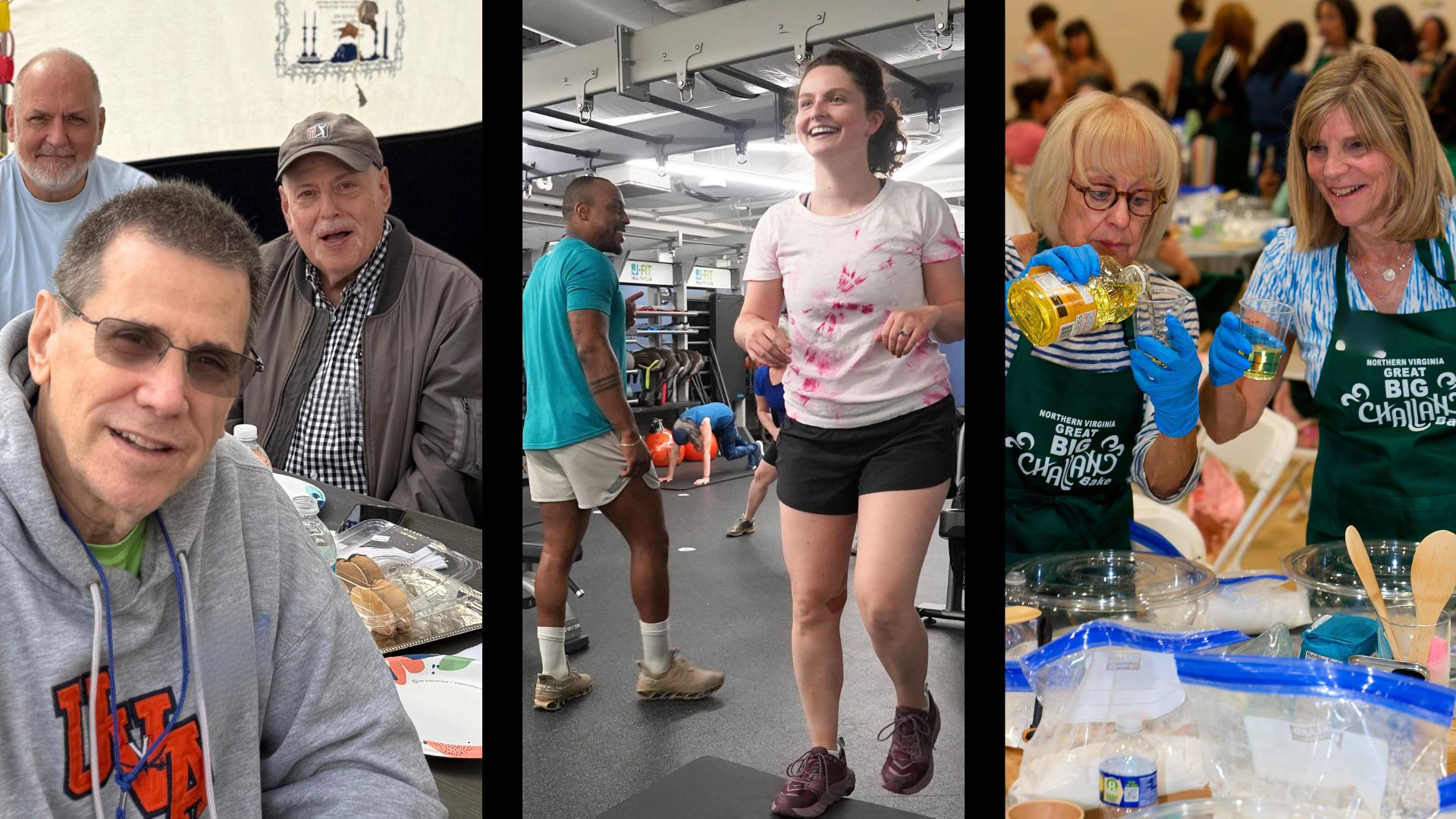
If you’re committed to exercising more in the new year, either to lose weight or get stronger or improve your heart health, the J-Fit Health Club can help you embrace a healthier lifestyle. Unlike gyms you might have tried before, J-Fit is a nonjudgmental zone. You don’t have to rock action-hero abs or sculpted arms to be welcome at the weight rack or on the resistance machines. No one will give you side-eye for walking rather than sprinting on the treadmill.

Plus, the friendly staff is here to help you start or continue your fitness journey. You can sign up for personal or small-group training to get individual attention as you develop a fitness plan. If you need social motivation, the J offers six days of group fitness classes each week, including pool-based workouts and senior-focused classes.

If saving money is also on your resolutions list, take advantage of J-Fit’s limited-time promotions to get extra value from your membership.

Resolution: Make new friends

Most people I know complain they don’t have enough friends, whether they’re busy working moms or retirees who have left the social environment of their former workplace. If expanding your social circle is a 2026 goal, the J can play matchmaker, no matter your age or stage. Kids easily make friends at our youth programs, including the Chai 5 after school program and Camp Achva summer day camp. Neurodiverse kids and young adults can expand their social horizons through the J’s inclusion and disability services, such as social skills classes and the Going Places monthly social club.

Parents of young kids will bond while their children enjoy activities like apple picking, holiday parties and crafts through Growing Jewish Families events. They also chat in the hallways during ECLC pickup; don’t estimate the power of preschool friend birthday parties for making new adult connections. The J hosts a number of affinity groups where likeminded people can get together to discuss books, men’s and women’s issues, and local news. Widows and widowers can ease their loneliness at monthly support groups in Herndon and Fairfax.

But, really, if new friends are the goal, just take a seat in the J’s main lobby. It’s a happening hangout, especially for the senior set, and pretty soon, you’ll get roped into a card game and everyone will know your name.

Resolution: Volunteer more and give to charity

Some New Year’s resolutions have a social impact bent. If you’d like to make the world a better place by giving your time and money to good causes, start your foray into tikkun olam at the J. If you have time to share, go to the J’s Volunteer Services page to find opportunities to cook and serve food to our unhoused neighbors or give rides to seniors who no longer drive with NV Rides. If you have money to give, you can donate to the J’s many programs that are free to the community or give to sustain the J itself. We also partner with the Sunrise Association to run a free camp and offer free activities for children fighting cancer. Your donation to the Sunrise Day Camp—Greater Washington will have a big impact on area families – and keep you on track with your resolutions.

Resolution: Learn a new skill

Lifelong learning is a trend these days, and it’s never too late to learn a new skill. Check out the J’s Adult Learning programs if you’d like to embrace your inner student in 2026.

Choose from language classes in Hebrew, Yiddish, and Spanish for novice and intermediate-level students. Our Mah Jongg and pickleball classes will not only teach you new skills but serve as a fabulous social opportunity (knocking off two resolutions for the price of one). The J offers swim lessons to members of all ages, from babies to seniors.

Spend more time with family

Spending time with family is a worthy resolution and one that starts at home – but it doesn’t stop there. The J makes space for parents and children to create memories together through its family programming at the center and around Northern Virginia.

Families can splash and play together during Saturday morning family swim times at the Aquatic Center or join hands for weekly Israeli Dance sessions. Young families can learn about Shabbat and holidays or just have fun at Growing Jewish Families events. Plus, keep an eye on the J’s calendar or weekly emails for one-off all-ages events, like our annual Hanukkah party.

If you’re resolved to try something new in the new year, the J is resolved to support your goals. Maybe we’ll see you here on January 1 for New Year’s Day bootcamp. If not, we’ll be here when you’re ready to rock those resolutions.
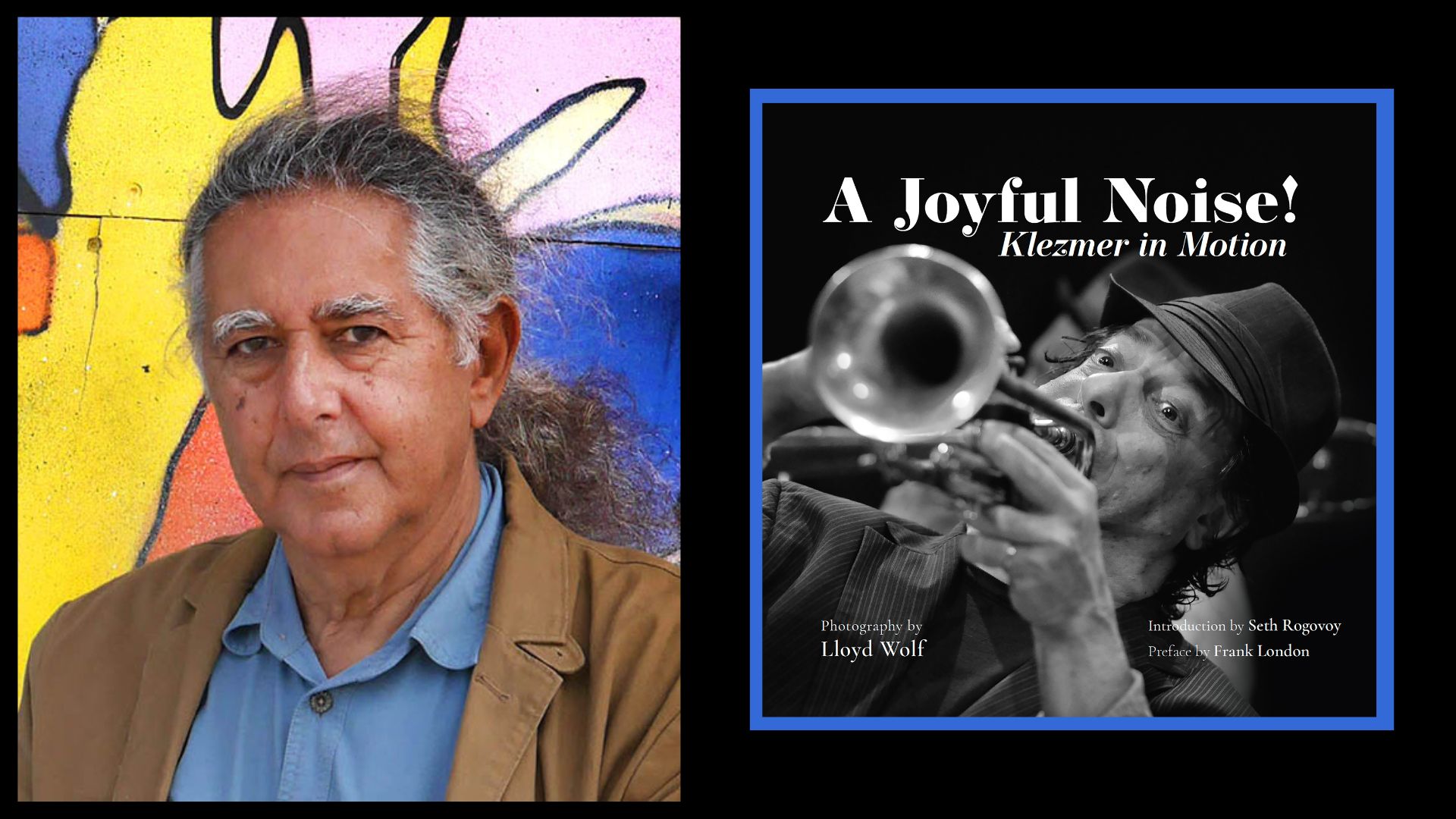
In Conversation with the Curator: Photographer Lloyd Wolf

A Joyful Noise: Photographs of Klezmer Musicians  
In the Bodzin Art Gallery December 15, 2025 – January 26, 2026 

Closing reception and klezmer concert with Mrs. Toretsky’s Nightmare
January 24, 2026
7:00 PM-9:00 PM 
Register here


Fun fact: The very first time I showed my art outside of school was at the Bodzin Art Gallery (yes, this very one) in 2007 in a group photography exhibition called Living Tradition, curated by Lloyd Wolf.  Sharing Lloyd’s A Joyful Noise: Photographs of Klezmer Musicians is quite a full-circle moment — and a blessing. 

The exhibit’s 45 dynamic images serve as a large-scale glimpse into Lloyd’s A Joyful Noise: Klezmer in Motion. The book, published in 2025 by the Klezmer Institute, contains three decades worth of Lloyd’s photographs depicting historic and modern klezmer musicians. These photographs sizzle with energy, capturing the soul and sound of the performers in visual form. Books will be available for purchase at the J. 

For me, Lloyd Wolf is kind of a big deal. Here’s what he has to say about his work and this exhibition.  

Your documentary photography spans many topics from musical movements (klezmer, the Grateful Dead) to the diversity of our local community (Columbia Pike Documentary Project (CPDP) to Jewish joy in your Jewish Mothers and Jewish Fathers series and Jewish pain in your March of the Living series. It’s all so very… human. How do you decide what to turn your lens toward and share with others? 

Hard question! The camera has given me a visa to travel into many aspects of life. Some projects I have done that were particularly meaningful came from editorial or non-profit organization assignments; others were self-directed.  

My personal strengths and interest are in exploring the human condition. I am interested in how individuals and communities experience life and have done numerous projects exploring both the joys and travails of existence.  

I have obviously done quite a bit of work in the Jewish community. Coming to grips with my own, with our, Jewish identity, particularities, history, customs, and culture is something I can interface with in depth using a camera.  

The ongoing DC street shrines to homicide victims photographs (Shrines – Washington’s Other Monuments) come from my work volunteering with “Shooting Back” and “Streets to Skills,” programs where I and other artists mentored homeless and formerly homeless kids in photography. I developed a close relationship with one of the kids I worked with, Dion Johnson. During the 1990s he lost four relatives to murder in 13 months. It was terribly hard on him.  

I began to have a more visceral awareness of the impact ongoing violence has in our society and how society at large so often ignores the fundamental causes of violence, particularly when it occurs in minority communities. Each person killed is an entire world — a fundamental Jewish concept. 

I am not a public policy expert, police officer, elected official, or social worker, but I know art can be the catalyst for conversation and action.  

When did you start making photos of klezmer musicians, and when did you know it was going to be an ongoing project and book?  
 
I was 40 years old when this collection of photographs began. In December 1992, I got an assignment from Jeff Rubin, then the editor of Bnai Brith’s magazine, Jewish Monthly. I was sent to New York City to do a photo essay on two of the new klezmer revival groups, Kapelye and the Klezmatics.  

I met up with Kapelye at a rehearsal space in the Workman’s Circle building. It was a plain room, and I had to light the whole thing in order to render the pictures at magazine-quality on transparency film. It made things a bit awkward with the big strobe lights flashing.  

I didn’t know any of the members — Henry Sapoznik, Adrienne Cooper, Ken Maltz, Eric Berman, and others — who put up with the interference with grace and began to weave their musical spells. I can’t recall the particular melody but do remember being in awe of Adrienne Cooper’s deep, commanding, matronly voice and presence.  

The next night I was to meet Frank London from the Klezmatics at the Bottom Line club. We talked and shared a meal before their show, and we hit it off. Here was a Jew of my generation, who fully expressed his passion and art in an explicitly ethnic context, and with exceptional skill and brio.  

He, and the other band members at the time — Dave Licht, Alicia Svigals, David Krakauer, Lorin Sklamberg, and Paul Morrisett — delivered a masterfully exhilarating concert, with music I had never heard expressed so vividly and knowledgably. Their rendition of the Chasidic tune “Shnirele Perele” (String of Pearls) opened up something deep, a grand opening of the soul in sound. 

I began to photograph their other performances when I could and, as time went on, to document other klezmer ensembles, sometimes on assignment but more often to fulfill my growing interest in and love for the music and the musicians themselves. I began to know more about the music — the repertoire, the history, the practitioners, the dances and other cultural expressions associated with it.  

From one side of my family background and school studies, I had a passing knowledge of German and, because of linguistic relationships, was able to appreciate bits and pieces of Yiddish, intertwined with the music. I had heard what we now term klezmer music at my mother’s parents’ home in the Bronx, where the radio was often tuned to the Yiddish station, but I did not consciously know of or listen to the music until the late 1980s.  

As my relationship with the scene grew, I created album cover art for some of the bands, and after some time realized I had created a perhaps unique archive of many of the musicians and the music itself, though in visual rather than sonic form. I have photographed hundreds of bands and individual performers, from the internationally known to small community ensembles and one-gig projects.  

Somewhere about 10 years ago, I realized I had a unique and coherent collection of work and began the process of getting the work published in book form. It took some time to get the right publisher, but the work of three-plus decades has come to fruition in what I trust is a meaningful, uplifting, and engaging form. 

This body of work has concentrated my focus and held my attention for over three decades. I just like klezmer music. A lot. And I trust the pictures convey some sense of what I find so compelling about it. 

Taking photos at a concert with low lighting and lots of movement poses some challenges. Tell us more about how you overcome those obstacles with the right equipment. When do you know you’ve captured a winning shot? 

This project was made over three decades, so the technical issues have changed. In the first years using film, it was harder to render indoor concert performances with any assurance. There were some very high-speed black and white films available by 1992, but they were rather grainy, and I couldn’t predict the outcomes with much certainty — both technically and aesthetically.  

Behind the Scenes at the J: What It Really Takes to Sustain Our Community

Jews don’t practice charity. We pursue tzedakah (justice) and gemilut chasadim (acts of lovingkindness) in pursuit of tikkun olam (repairing the world). Charitable giving is just one way in which we make the world a better place. We take what we earn from our own hard work and put it toward benefitting others in our community. It’s a win-win; we fulfill commandment and our community is strengthened as a result. 

Maimonides, however, challenges us to think about how we give. He ranks charitable giving from the lowest degree – giving only when asked – to the highest: forming a business partnership with someone in need, so that person no longer needs to rely on others to survive.  

Maimonides’ second highest level of giving is anonymous giving and receiving, in which the donor doesn’t know specifically where his gift will go, and the recipient does not know who helped him. In a way, that’s the type of giving we need at the J.  

Most people like to see visible results from their giving – programs continued, research pursued or an animal saved.  But we need tzedakah that supports our behind-the-scenes operations that are so vital to the gathering spaces and activities you love, but that are invisible to most members.  

These include: 

  • Security personnel, surveillance systems, and access controls to keep our community safe.  
  • Modern, reliable technology, including our computers, software, and IT systems—everything from online registration to donation management.  
  • A full-time cleaning service, as well as continual maintenance and repairs, so we can sustain a clean, comfortable, and functional space.  
  • Insurance to cover everything from fire protection and cybersecurity to our vehicles for after-school transportation, our childcare programs, our fitness center and more.  

 These expenses alone add up to more than one million dollars annually, but membership dues and program fees cover less than 75% of the cost of operating the J. Charitable support makes everything we do possible.  

Our staff strives to make engaging with the J feel easy, but behind that ease is a tremendous amount of effort, expertise, and heart — and the invisible systems that support all we do.  

As we approach the end of the year, we invite you to consider what the J means to you, your family, and our broader community. If the J has made a difference in your life—or if you simply value the role it plays in our region—please consider making a tax-deductible gift this year.  

You might not see all the things that go into making the J a central part of your community, and you might never know where your gift has made a difference. But trust us – your contribution will have a big impact in keeping the J running smoothly. And that’s a visible result our entire community will notice and appreciate. 

Finding Light All Year Long: How the Pozez JCC Helps Jewish Families Feel Seen, Connected, and Proud

December can be complicated for many American Jewish families. While lights twinkle at neighbors’ houses and storefronts fill with Christmas trees, Hanukkah, and Jewish identity more broadly, can feel overshadowed. Parents at the J often share that even well-meaning questions like “What’s on your Christmas list?” can leave their children unsure of how to respond. 

That’s why, every December, the J steps forward with joyful, welcoming programming that celebrates Jewish identity in ways that feel both proud and affirming.

“Although Hanukkah is a relatively minor holiday, it becomes a major marker of Jewish visibility at this time of year,” says Amy Lummer, Family Engagement & Community Partnerships Director. “We strive to create space where every family feels seen and where Jewish celebrations shine in their own right.”

This year, the J is hosting two large community Hanukkah celebrations, each expected to draw hundreds. Smaller gatherings hosted by Growing Jewish Families (GJF) will offer storytimes, relaxed playdates, and meetups at parks and donut shops.

“All through December, our programs are Hanukkah fun for every age,” Amy says. “Our goal is for every child and parent to feel proud of their heritage and confident that their celebrations are valued within the broader community.”

That sense of belonging doesn’t fade when the menorahs are put away. At the J, December is just the gateway to a year filled with connection. And for many families, that connection begins the moment they arrive in Northern Virginia.

For newcomers, GJF offers a warm landing place. Its J-Family Ambassadors meet families one-on-one, help them navigate local resources, and create easy, low-pressure ways to connect Jewishly through playgroups, holiday events, coffee meetups, and neighborhood gatherings.

For Elisabeth Kopecky, who moved to NoVa last year with a toddler, an infant, and a husband on active military duty, GJF quickly became an essential support network.

“This program just makes it so easy,” she says. “You’d have to try not to be involved. There are so many activities and so many people to meet.”

What started as a search for community became something deeper.

“Tracy, one of the GJF ambassadors, has become one of my closest friends,” she says. “She watched my older son while I was giving birth to my younger one. GJF is very much the center of our support system here.”

The connections have been meaningful not only for Elisabeth but for her children as well, becoming an anchor during a period of transition.

That continuity is part of what makes the J feel like a year-round home. School-Age Services Director Greg Feitel says the J’s programs are intentionally designed to grow with families. Many children begin at the Early Childhood Learning Center (ECLC), then move into Chai 5 after-school care, participate in Vacation Days programming during school breaks, and sign up for Camp Achva in the summer. 

Jewish values are the foundation of all of these programs.

“The philosophical underpinnings of all our programs are 100 percent Jewish,” Greg explains. “It’s not a strict religious practice, but a value system: creating positive associations with Judaism and a welcoming environment for anyone who comes. Our planning process dives into whether each activity creates a more joyful experience or another place for connections.”

Families feel the impact of that intention. Rachel Davis, whose son Sammy is now in first grade, says the J has helped her family build lasting friendships since moving back to NoVa three and a half years ago. Sammy started in ECLC, then continued into GJF programming, Vacation Days, and Camp Achva.

“Last summer was his first at Camp Achva, and we’ll have him back this coming year,” Rachel says. “He had such a blast reconnecting with preschool friends and making new ones.”

The J’s holiday and school-break programs also help Sammy stay connected Jewishly.

“As kids get older, they notice all the Christmas stuff,” Rachel says. “For Jewish kids, being able to celebrate Hanukkah with the community helps them feel involved. It gives them a sense of pride in their Jewish identity.”

She’s also found her own community at the J, connecting with other parents, joining a monthly Mah Jongg group, and watching her husband find his own place through the J’s fitness classes.

“When you’re moving to a new area, finding community is so important,” she says. “The J has been that place for us.”

Much of what families experience at the J is strengthened by community support behind the scenes. A generous donation, matched by community contributions, recently made it possible to renovate the ECLC playground, giving young learners a safer and more engaging outdoor space. GJF and Camp Achva continue to expand thanks to grant funding that supports infrastructure and program enhancement. And across all departments, volunteers play a key role by giving their time to help programs run smoothly and remain accessible.

As camp registration opens in mid-December, the J’s full-circle approach becomes clear. Families may walk through the door because they’re looking for a Hanukkah celebration, but they stay because they’ve found a community where they belong, one that carries them through every season, every transition, and every stage of childhood. The J provides that support in large part because of donors who believe in building a community where Jewish families feel seen, supported, and proud all year long.

Because being Jewish can feel different, especially in December. But at the J, families never have to feel alone.

Interested in helping families feel connected all year long? Consider registering for an upcoming program, volunteering your time, or making a donation that helps our community shine brightly.