

Kehillah, kavod and chesed: How Jewish values and traditions nurture ECLC preschoolers
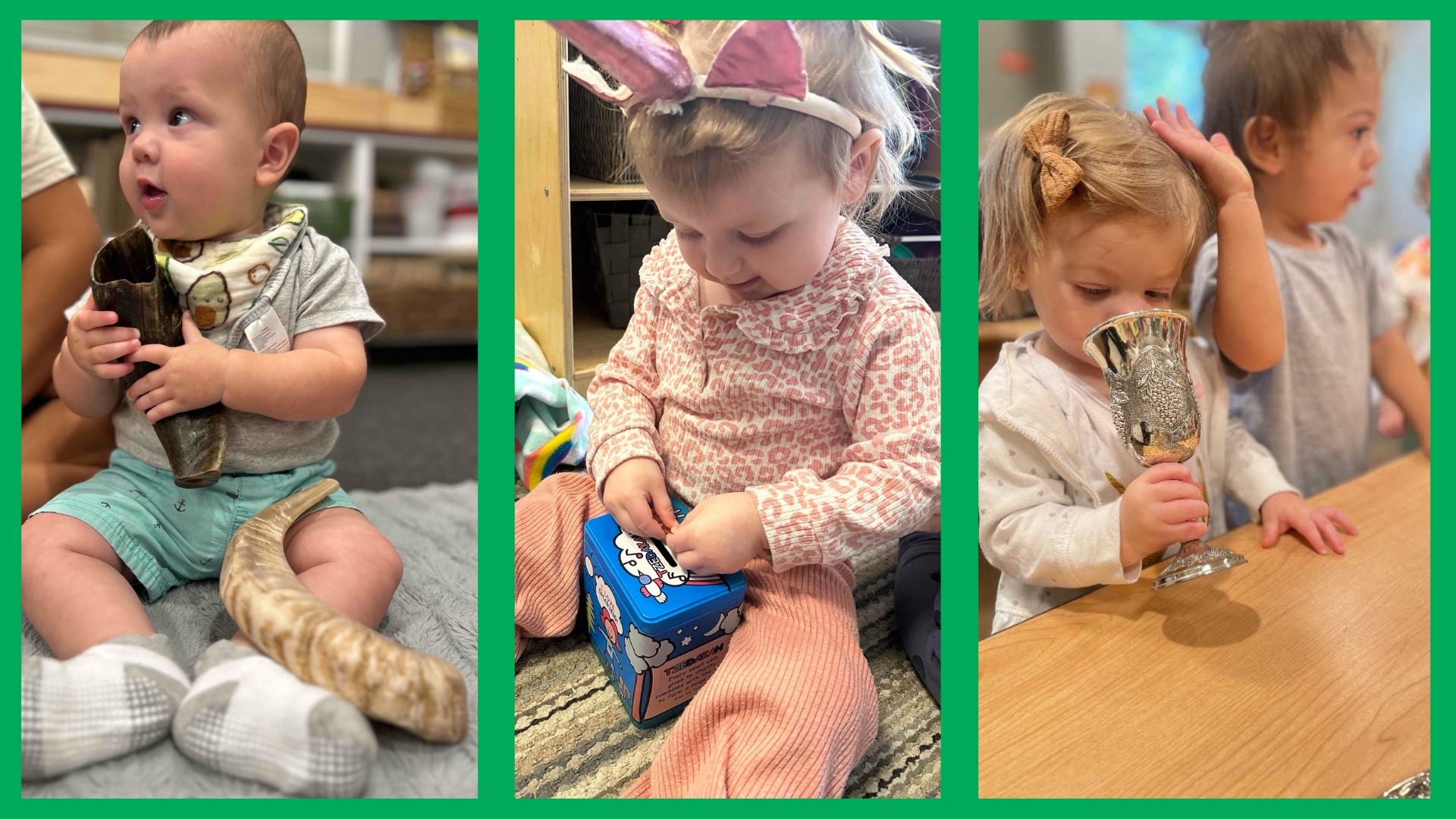
Last year, the children in the ECLC’s Chaverim class discovered a simple joy: bringing coins in each Friday to add to their classroom’s tzedakah box. This year, they informed their new teachers that they must continue the tradition of donating coins to charity each week.
These kids were 2 years old.
The Pozez JCC’s ECLC is grounded in Jewish traditions and values because it’s never too early to expose children to their cultural heritage. Its educators also know that Jewish rituals and concepts can serve a dual purpose – forging a deep connection to Judaism and inviting young children to grow by engaging with the world around them.
The ECLC is often children’s first encounter with Jewish traditions. “For the first few years of their lives, the kids’ Jewish identities were very much the ECLC,” says Yelena, mom of one ECLC preschooler and two graduates. Her kids would come home and share the Hebrew words and holiday songs they learned that day. Some of their favorite experiences were Purim and Hanukkah celebrations.
As ECLC students grow to love these Jewish rituals, they naturally want to bring them home to their families – turning young children into Jewish educators for their parents.
“Sometimes he knows about some of the holidays, like Simchat Torah, that I don’t remember celebrating when I was a kid,” says Daniel, a parent of two children in the ECLC. Yelena shares how her family began to observe Shabbat at home, with her kids saying the blessings, instructing their family on which foods to serve at dinner, and dancing in the living room to songs they learned at school.
In this way, the ECLC not only inspires Jewish children to find a joyful connection to their heritage, but it transforms young kids into ambassadors who bring Jewish traditions and values back to their families, strengthening our community.
“Jewish holidays and traditions also serve as rich invitations for inquiry rather than simply occasions for celebration,” says Hillary Gile, ECLC’s pedagogista. “Children might explore light through Hanukkah, gratitude and hospitality during Sukkot, or the cycles of nature connected to Tu B’Shvat.”
The 3-year-olds in the Yahad class celebrate Havdalah each Monday, marking the transition from Shabbat into the start of a new week. The ritual acts – smelling the spices, observing the candlelight, hearing the blessings – teaches kids to engage their senses. Celebrating Havdalah together creates a feeling of connection in the classroom, building community. The larger idea of an intentional transition is meaningful in a classroom setting, helping kids process the transitions from one activity to the next.
“Even just discussing Havdalah can open up conversations about traditions, respect for different cultures, and how people mark important moments in their lives,” says teacher Em. The ritual is merely a starting point to spark kids’ curiosity and lead them to ask questions and think deeply.
Beyond holidays and cultural rituals, Jewish values are woven into the daily routines of the ECLC, with each class choosing a value such as kehillah (community), kavod (respect), and chesed (loving-kindness) to be their class name and inform their activities throughout the year. These values transcend any particular religion and allow ECLC students from all backgrounds to develop empathy, learn to care for the environment, and nurture their friendships and community.
“Ultimately, the integration of Jewish values does more than teach about Judaism. It helps cultivate compassionate, thoughtful, and engaged citizens,” says Gile.
Because 2-year-olds who understand the power of tzedakah to transform their community are bound to grow into adults who make the world a better place.