Join the J in June to receive $109 off enrollment fee! Learn More.

A Jewish Lens on Conflict Transformation

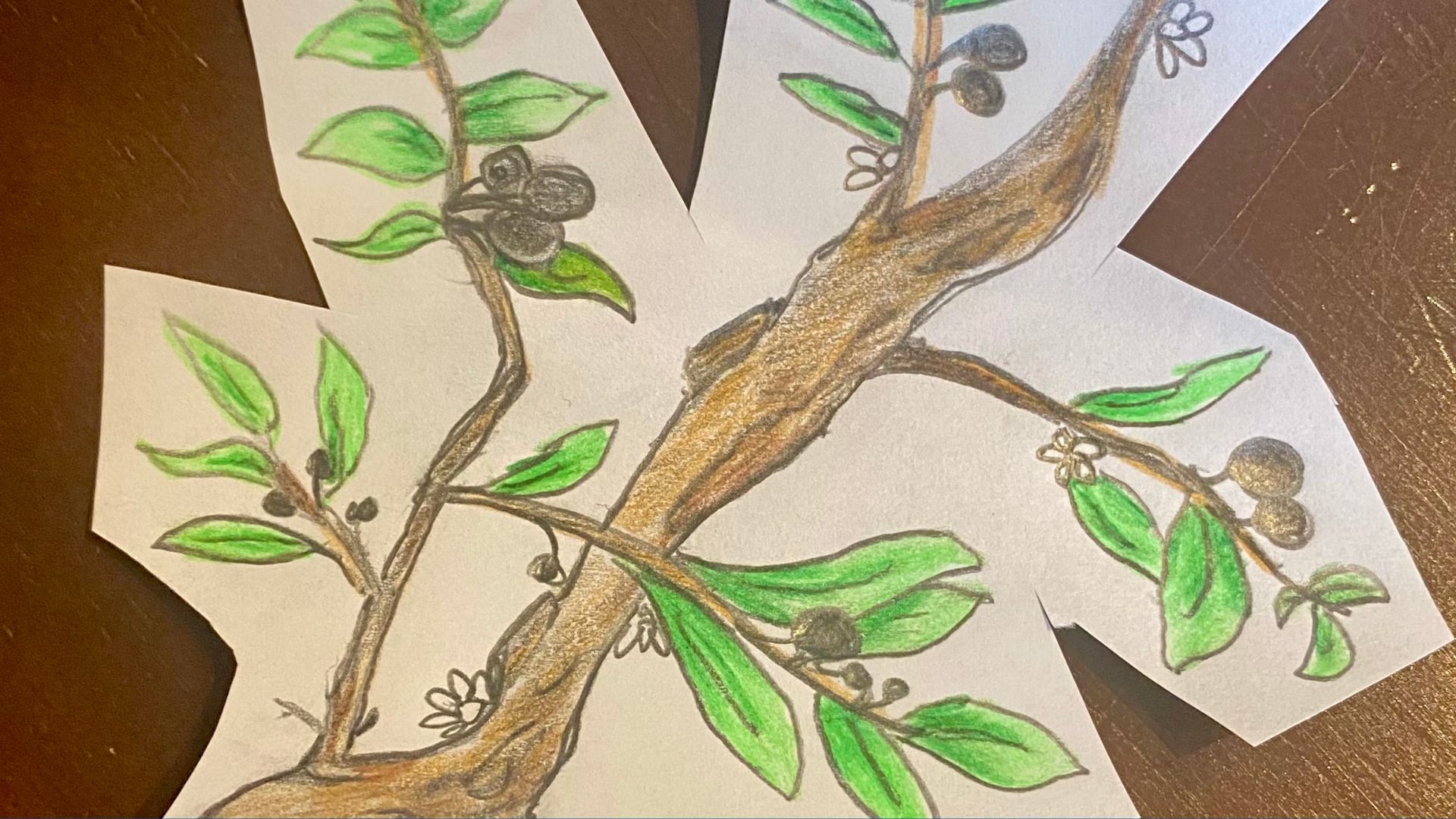
This Passover I added an olive branch to my seder plate.  After doing a bit of research on how to acknowledge the conflicts around the world, I landed on the olive branch as a sign of peace.  In doing so, I realized I might also create a space for dialogue at the Seder table where not every family member agrees on how to achieve peace.  My father encouraged me, reminding me, reminding me to allow everyone to be heard, to build community by acknowledging that differing opinions are both expected and honored. 

This notion was echoed in the Pardes Institute’s Mahloket Matters Fellowship I participated in this fall. A mahloket is a disagreement. The fellowship posited that Jewish teachings promote constructive disagreement, creating space for deeper meaning, relationship building, and better solutions — essentially transforming conflict into a method to build bridges and community. 

What’s Jewish about constructive disagreement?  You may have your own answers for this drawing from your recent Passover Seder or family squabble! Diving into rabbinical texts in the fellowship, we explored the notion that not even Moses was blessed with knowing everything. This humbles each of us to accept that truth for ourselves as well.  We also learned that the Sanhedrin (Jewish supreme religious court) encouraged disagreement (not uniformity) to find better solutions. 

According to Pardes’ Mahloket Matters Fellowship, the four pillars of a constructive disagreement are: 

  1. Debate the issues without attacking people and harming relationships. 
  1. Check your motivation.  Are you trying to win or to understand and solve problems? 
  1. Listen to the other side and be open to admitting that you might be wrong. 
  1. Consider that you might both be right despite holding opposite positions. 

In the spirit of constructive disagreement, I used the olive branch on my seder plate to open a conversation where the diverse perspectives at my table could be respected.   

This spirit is what led me to the Pozez JCC, where we build community every day by listening to everyone and making space for disagreement.  The six J-Family Ambassadors I support are opening conversations with young Jewish families looking to connect and build community throughout Northern Virginia.  They are creating events based on their community’s expressed desires and meeting people where they are to support growing families and their Jewish identity. 

The Pozez JCC has supported the J-Family Ambassador Program from its inception here in Northern Virginia and promotes an environment of learning and dialogue. Pozez leadership also encouraged my participation in Mahloket Matters, recently hosted a workshop from For the Sake of Argument (a program that also builds skills for constructive disagreement), and continues to support diverse and thoughtful programming with a welcoming communal atmosphere.  We always welcome suggestions, so if you have a program you want to see, please let us know! 

You can join us in the spirit of building a rich, diverse community in any of the following ways: 

  • Come to the Pozez JCC and see what the buzz is about!  You’ll always find a friendly face and an engaging activity, ranging from special events to fitness to Mah Jongg in the lobby.  

When April Fools’ Day Meets the Seder Table: Leaning Into the Silly This Passover

 This year, something wonderfully unexpected is happening: the first night of Passover falls on April Fools’ Day. And honestly? We think that it is worth celebrating.  

Passover has always had room for joy, laughter, and a healthy dose of chaos, especially when little ones are at the table. This year, instead of resisting the overlap, why not lean all the way into it? 

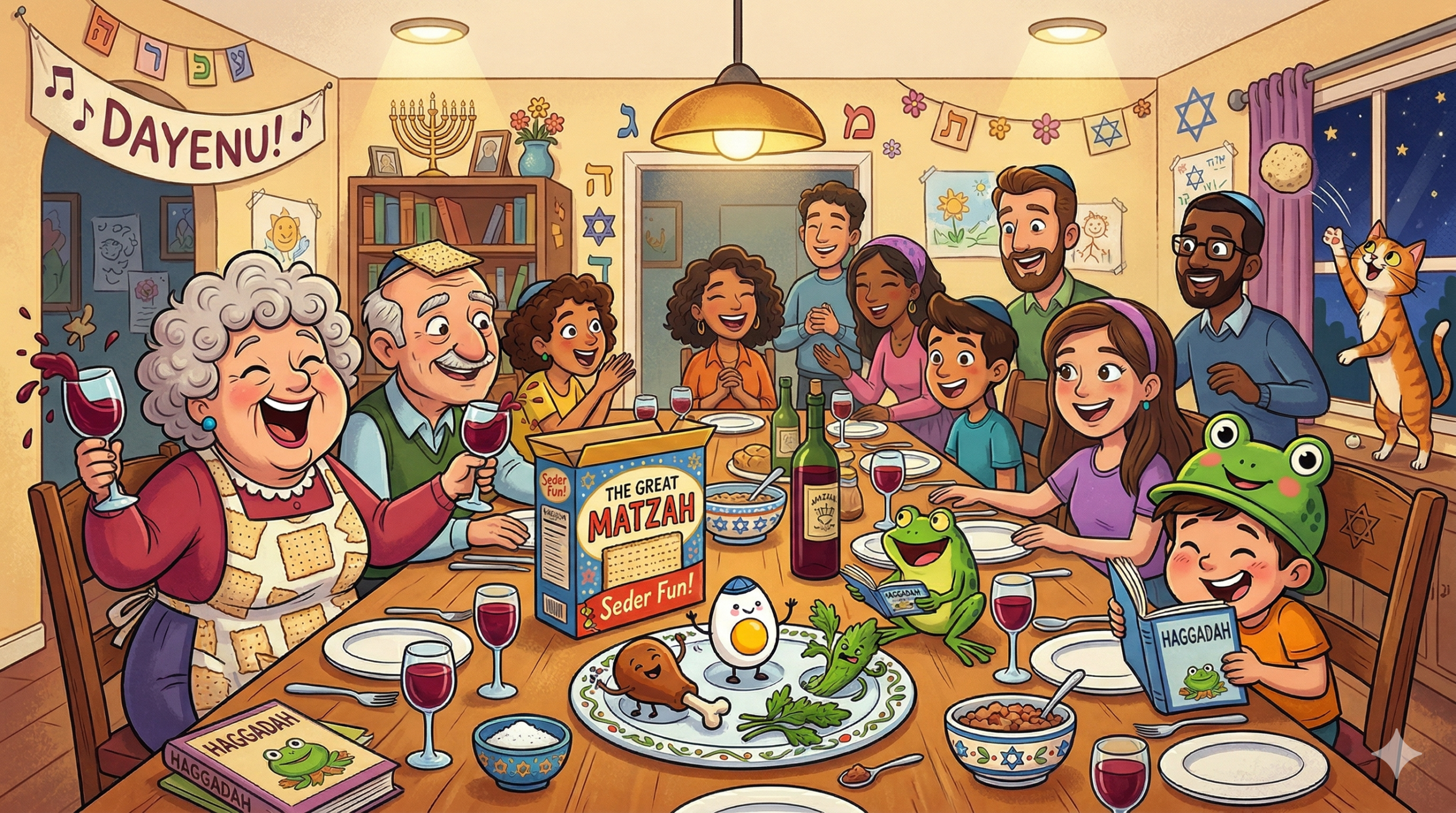
The seder is already full of built-in silliness. We dip twice, we recline, we open the door for Elijah, and we spend a good portion of the evening asking questions and telling a story through food. Children are not just welcome at the seder table, they are central to it, reciting the four questions and providing up-to-the minute commentary. The Haggadah is designed to spark curiosity, invite participation, and make the night feel different from all other nights. A little extra playfulness only deepens that spirit. 

What might a silly seder look like? Hey Alma (a Jewish culture website) recently asked their community to post about their silliest Passover traditions and received a delightful collection of creative ideas.  

Some families build matzah houses the way others build gingerbread houses, complete with vegetables and toppings. Others throw marshmallows during the plague of hail, hide tiny plastic frogs in each other’s shoes and cups, and have someone arrive in costume when the door is opened for Elijah. One family does Mad Libs for the Maggid. Another reads from a decades-old Haggadah full of typos and considers it a sacred obligation to pronounce every word exactly as printed. 

These traditions are a wonderful reminder that Jewish families have always found ways to make the seder their own. 

If you are looking to take the fun a step further, Recustom (an online platform for exploring Jewish rituals) offers a Comedy Seder Haggadah that brings humor directly into the ritual. A comedy-forward Haggadah can be a wonderful way to keep older kids and teens engaged, welcome guests who are new to the seder, and shake things up in the most joyful way possible. 

Here are a few easy ideas to bring more laughter to your table this year: 

  • Give everyone a silly prop to wear during the telling of the plagues. We use plague headbands at our house, but you can also buy masks and finger puppets.  
  • Let the kids be in charge of sound effects during the recitation of the Passover story or ask them to act it out. 
  • Try reading a section of the Haggadah in a funny accent, chosen at random.  
  • Change the rules to the afikomen game. Reverse the roles of kids and adults in stealing, hiding, and searching for the afikomen. Or, allow each kid to hide a piece of matzoh and decide who should find it.  
  • Give a silly afikomen prize (brussels sprouts, anyone?). 
  • Recite the seder backwards. 

The seder has survived thousands of years not because it stays the same but because every generation brings something new to the table. This April Fools’ Passover, we hope yours is filled with matzah, meaning, and more than a few good laughs. Chag Sameach! Happy Passover! 

Young families looking for more Passover fun can join two Growing Jewish Families events during the holiday.  

Finding Light All Year Long: How the Pozez JCC Helps Jewish Families Feel Seen, Connected, and Proud

December can be complicated for many American Jewish families. While lights twinkle at neighbors’ houses and storefronts fill with Christmas trees, Hanukkah, and Jewish identity more broadly, can feel overshadowed. Parents at the J often share that even well-meaning questions like “What’s on your Christmas list?” can leave their children unsure of how to respond. 

That’s why, every December, the J steps forward with joyful, welcoming programming that celebrates Jewish identity in ways that feel both proud and affirming.

“Although Hanukkah is a relatively minor holiday, it becomes a major marker of Jewish visibility at this time of year,” says Amy Lummer, Family Engagement & Community Partnerships Director. “We strive to create space where every family feels seen and where Jewish celebrations shine in their own right.”

This year, the J is hosting two large community Hanukkah celebrations, each expected to draw hundreds. Smaller gatherings hosted by Growing Jewish Families (GJF) will offer storytimes, relaxed playdates, and meetups at parks and donut shops.

“All through December, our programs are Hanukkah fun for every age,” Amy says. “Our goal is for every child and parent to feel proud of their heritage and confident that their celebrations are valued within the broader community.”

That sense of belonging doesn’t fade when the menorahs are put away. At the J, December is just the gateway to a year filled with connection. And for many families, that connection begins the moment they arrive in Northern Virginia.

For newcomers, GJF offers a warm landing place. Its J-Family Ambassadors meet families one-on-one, help them navigate local resources, and create easy, low-pressure ways to connect Jewishly through playgroups, holiday events, coffee meetups, and neighborhood gatherings.

For Elisabeth Kopecky, who moved to NoVa last year with a toddler, an infant, and a husband on active military duty, GJF quickly became an essential support network.

“This program just makes it so easy,” she says. “You’d have to try not to be involved. There are so many activities and so many people to meet.”

What started as a search for community became something deeper.

“Tracy, one of the GJF ambassadors, has become one of my closest friends,” she says. “She watched my older son while I was giving birth to my younger one. GJF is very much the center of our support system here.”

The connections have been meaningful not only for Elisabeth but for her children as well, becoming an anchor during a period of transition.

That continuity is part of what makes the J feel like a year-round home. School-Age Services Director Greg Feitel says the J’s programs are intentionally designed to grow with families. Many children begin at the Early Childhood Learning Center (ECLC), then move into Chai 5 after-school care, participate in Vacation Days programming during school breaks, and sign up for Camp Achva in the summer. 

Jewish values are the foundation of all of these programs.

“The philosophical underpinnings of all our programs are 100 percent Jewish,” Greg explains. “It’s not a strict religious practice, but a value system: creating positive associations with Judaism and a welcoming environment for anyone who comes. Our planning process dives into whether each activity creates a more joyful experience or another place for connections.”

Families feel the impact of that intention. Rachel Davis, whose son Sammy is now in first grade, says the J has helped her family build lasting friendships since moving back to NoVa three and a half years ago. Sammy started in ECLC, then continued into GJF programming, Vacation Days, and Camp Achva.

“Last summer was his first at Camp Achva, and we’ll have him back this coming year,” Rachel says. “He had such a blast reconnecting with preschool friends and making new ones.”

The J’s holiday and school-break programs also help Sammy stay connected Jewishly.

“As kids get older, they notice all the Christmas stuff,” Rachel says. “For Jewish kids, being able to celebrate Hanukkah with the community helps them feel involved. It gives them a sense of pride in their Jewish identity.”

She’s also found her own community at the J, connecting with other parents, joining a monthly Mah Jongg group, and watching her husband find his own place through the J’s fitness classes.

“When you’re moving to a new area, finding community is so important,” she says. “The J has been that place for us.”

Much of what families experience at the J is strengthened by community support behind the scenes. A generous donation, matched by community contributions, recently made it possible to renovate the ECLC playground, giving young learners a safer and more engaging outdoor space. GJF and Camp Achva continue to expand thanks to grant funding that supports infrastructure and program enhancement. And across all departments, volunteers play a key role by giving their time to help programs run smoothly and remain accessible.

As camp registration opens in mid-December, the J’s full-circle approach becomes clear. Families may walk through the door because they’re looking for a Hanukkah celebration, but they stay because they’ve found a community where they belong, one that carries them through every season, every transition, and every stage of childhood. The J provides that support in large part because of donors who believe in building a community where Jewish families feel seen, supported, and proud all year long.

Because being Jewish can feel different, especially in December. But at the J, families never have to feel alone.

Interested in helping families feel connected all year long? Consider registering for an upcoming program, volunteering your time, or making a donation that helps our community shine brightly.

Hakarat hatov: A Jewish gratitude practice for Thanksgiving

 As Thanksgiving approaches, I am reminded of the power of the Jewish value of hakarat hatov, looking for the good.  When the seasons change and I miss the warmth of summer, hakarat hatov reminds me to see the beauty in the world through the changing colors of the leaves.  When life feels hard, simple things, like my favorite lavender soap or a minute of sun on my face, bring a smile to my face and help me keep a positive attitude. 

Hakarat hatov, like any gratitude or positive-thinking practice, challenges our hard-wired negativity bias as humans who are conditioned to scan our environment for threats. Jewish sages must have understood the need for a regular practice to build our gratitude muscle, and so hakarat hatov is built into Jewish tradition. Every morning, the Modeh Ani prayer reminds us to be grateful, and prayers of gratitude are included in every holiday.   

As simple as it sounds, daily gratitude practices are powerful. I am amazed at the peace and calm that settle over my children and me when we focus on specific things we are grateful for at the end of the day. The practice even sets the stage for better sleep. As a life coach, I witness how my clients shift perspectives after adopting regular gratitude practices and how they find growth and energy when they look for the good. 

As Thanksgiving approaches, what regular gratitude practices can you lean into?  What are you grateful for today, this week, this month, this year? 

This year, I am grateful for the community I have found at Growing Jewish Families and the larger Pozez JCC of Northern Virginia.  As the new J-Family Ambassador Program Manager, I have been uplifted by the passion, values, and hospitality that overflow from the JCC’s staff and programming.   

Growing Jewish Families cultivates community by connecting families raising young children in a Jewish environment in Northern Virginia. The team of J-Family Ambassadors works to build community among young Jewish families by region by bringing gift bags to new parents, connecting with parents over coffee, creating online communities, and hosting family events focused on joyful Jewish learning and socializing. 

If your family has a child up to age 6, one of our J-Family Ambassadors is eager to welcome your growing family into our Jewish community. Here’s how you can get connected: 

 
Don’t have young kids? You can help families connect to their Jewish heritage and our community with your year-end gift to the Pozez Jewish Community Center. Donate here

Shlichut: A Bridge That Endures at the Pozez JCC

For 18 years, the shlichut program at the Pozez Jewish Community Center has served as a living bridge between Israel and NoVa. Through the presence of an Israeli emissary, or shaliach, the program has offered a personal connection to Israel for community members, many of whom have never visited the country or met an Israeli before.

“It’s one thing to meet an Israeli by chance,” said Zina Segal, senior director of community engagement at Pozez JCC. “It’s another to meet a shaliach who has been trained to answer complicated questions, share their own story, and create spaces for dialogue. That is the unique power of this program.”

L’hitraot to Dean Bagdadi

This August, the community bid farewell to Dean Bagdadi, who concluded three years as Pozez JCC’s senior shaliach. From his earliest days, Dean embedded Israel as a central pillar of community life, through headline events like vigils with more than 1,000 attendees, and through quieter gatherings like weekly discussion circles and coffee dates.

Dean’s authenticity left a mark.

“He touched so many lives because he was open and nonjudgmental,” Zina reflected. “People felt they could ask him anything, and he would meet them with patience and calm.”

October 7 transformed his work overnight. Just 30 hours after the Hamas attacks, Dean convened an impromptu gathering of clergy, professionals, and community members. Days later, he helped lead a massive vigil uniting synagogues across denominations. The months that followed brought a surge of engagement, as people sought connection, solace, and understanding.

“In a short time, Dean drastically shifted the environment in Northern Virginia, helping us to build bridges and connections with one another,” said community member Aviva Walls. “He led with his heart, and we all felt it.”

A New Beginning with Chen Sara

With Dean’s departure, the program now enters a new chapter. The community welcomed a new shlicha in August: Chen Sara Mordechai-Kedar.

“Dean filled his shoes, and now Chen Sara brings her own,” Zina said. “Every three years we bring someone new with different skills, experiences, and perspectives, so the community connects with Israel in fresh ways.”

Chen Sara, a self-described “community nerd,” says people are her hobby. She thrives on dialogue, believing no question is too rude if it comes from genuine curiosity. Chen Sara, a half-Mizrahi and half-Ashkenazi Jew who identifies as LGBTQ+, will lean on her multifaceted identity to bridge differences and foster belonging.

Her story is deeply global. After her army service, she spent time in Cambodia, where she helped establish a sustainable community clinic that still operates today. “I see this work as an expression of tikkun olam, repairing the world,” she said. She also carries insights from Israel’s travel culture, noting that “Israelis often prioritize exploring the world over comfort at home, an impulse that reflects our deep curiosity and adventurous spirit.”

Above all, Chen Sara wants to open doors for dialogue, even across divides. She dreams of creating open, respectful spaces where people who generally disagree with one another can talk face-to-face productively.

Why Shlichut Matters

The shlichut program in NoVa is one of only two in the region, despite being home to the largest Jewish population in the DC area. For Zina, that makes it especially meaningful.

Shlichut is about more than programs,” she said. “It’s about relationships. It’s about welcoming someone into our community who shares their life story and, through that, helps us strengthen our own Jewish story.”

As the community reflects on Dean’s impact and warmly embraces Chen Sara’s fresh perspective, the through-line is clear: Pozez JCC’s shlichut initiative is not merely for our community to learn about Israel or meet an Israeli, but to sustain a living and lasting bridge to Israel. By hosting, supporting, and integrating our Israeli emissaries, the J is ensuring that this connection continues to help shape the Northern Virginia Jewish community year after year.

Make It Yours

Are you done with your Rosh Ha-Shanah shopping? By the time I’m finishing this blog on Friday afternoon, my kitchen is already stocked with simanim: pomegranate, beets, pumpkin, honey, apples, green beans, scallions, fish, and carrots. Dates are still on my list, and I’m debating what will stand in for the ram’s head (most likely one of my kids’ Lego figurines will meet its fate…). 

But full disclosure — the most important delivery for our Rosh Ha-Shanah party isn’t the food. It’s the costumes. On the way are Abby’s floral t-shirt, purple wig, and yellow beanie; Jinu’s white t-shirt; Romance Saja’s yellow shirt with pink heart-buttons and pink wig; and Rumi’s deep purple wig with the long braid. If you’re confused right now, it means you don’t live with pre-teens or teens and haven’t been pulled into the world of K-Pop Demon Hunters. And even if you have watched it, you’re probably still wondering how this connects to Rosh Ha-Shanah! 

Here’s how: every year, our family hosts a big Rosh Ha-Shanah party with 5–8 families — usually 25–35 people. Each family brings food and a creative gift (a song, poem, dance, comedy act) tied to the theme of the year. One year it was Seven Days of Creation, another year it was simanim. This year’s theme is Rosh Ha-Shanah Around the World. Each family chooses a country and brings both food and a creative expression about Rosh ha-Shanah in this culture. When I asked our boys (ages 5 and 9) which country we should choose, they screamed in unison: KOREA! 

So… this year, we’re rewriting the lyrics to a K-Pop Demon Hunters song as a Rosh Ha-Shanah song. In Russian. (Don’t ask — it somehow makes sense in our house.) 

So why am I sharing all of this with you? Because I have a few wishes for you before the holiday: 

  • I wish you a community that matches your level of “crazy” — one that’s ready to laugh, sing, cook, and celebrate Jewish tradition together in creative ways. And if you’re still looking for that kind of community, Pozez JCC is a great place to find it. 
  • I wish you the courage to make Jewish tradition yours. Our heritage is ancient, rich, and endlessly relevant to modern life. There’s room for Torah and Talmud, but also for poetry, art, and yes — even K-Pop. 

If you’d like to explore how to bring Jewish traditions to life in ways that feel joyful and meaningful for you, I’d love to help. You can schedule time with me here. 

And if you need last-minute inspiration for your holiday table, here are a few links for inspiration: 

  • Sweeten your holiday prep — follow @miriams__kitchen for quick, creative Jewish recipes and baking ideas 

(Oh, and in case you were wondering: the K-Pop costumes did arrive while I was finishing this blog. Depending on how our performance turns out, I might even share it on my social media after the holiday!) 

Shanah Tovah U’Metukah — may it be a sweet, joyful, and meaningful new year! 

Celebrating Lag B’Omer with BBQs, Community, and Stories that Spark Joy

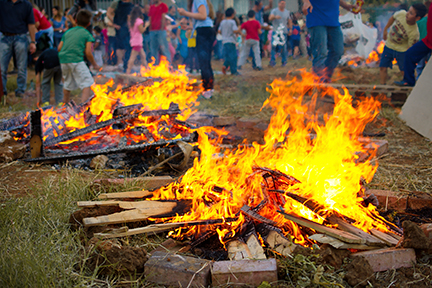
Lag B’Omer has always felt like a beautiful Jewish holiday to me, a hidden gem—a secret waiting to be discovered. Nestled in the middle of the Omer—the 49 days we count between Passover and Shavuot—Lag B’Omer gives us a joyful break in an otherwise quiet and reflective time. It’s full of bonfires, weddings, haircuts, and community gatherings that make it one of my favorite times together with other families.

So, what is Lag B’Omer?
Lag B’Omer is the 33rd day of the Omer count (the word Lag comes from the Hebrew letters lamed and gimel, which add up to 33 in Gematria). It’s a day that traditionally breaks a period of mourning, and instead we celebrate joy, resilience, and hope. It’s connected to Rabbi Shimon bar Yochai, a great sage who, according to tradition, passed away on Lag B’Omer and asked that the day be marked with happiness. It also commemorates the end of a terrible plague among Rabbi Akiva’s students.

Counting the Omer: My Family’s Journey of Growth
Each night between Passover and Shavuot, we count the Omer. It’s a ritual that’s taught my family to slow down and appreciate each day. It’s about more than counting—it’s about noticing. We’ve used it as a time to reflect on small but meaningful steps we’re taking in our own journey, just like our people did on their way from Egypt to Mount Sinai.

Why I Love Lag B’Omer: Bonfires, BBQs, and Being Together

Lag B’Omer has become a chance for my family—and our community—to get outside and celebrate! Whether it’s a picnic, bonfire, archery, music, or (my favorite) a backyard BBQ, it’s a time to unplug and reconnect with each other.

I especially love our Community Lag B’Omer Event. It’s such a joy to see families come out and fill the space with laughter, music, and the smell of grilled food in the air. Whether you join us for the bonfire, the games, or just that special feeling of being together, you help make it magical every year.

Our Favorite PJ Library Read: Sadie’s Lag B’Omer Mystery
One of the ways we used to teach our now teenage children about the holiday was through the PJ Library book Sadie’s Lag B’Omer Mystery by Jamie Korngold. We read it every year when our children were small. In the story, Sadie and her brother Ori look forward to their annual picnic but are curious about what Lag B’Omer is really all about. It’s sweet, engaging, and a perfect way for children to start understanding this lesser-known but meaningful holiday.

Not Getting PJ Library Books Yet?
If you are interested in getting books like Sadie’s Lag B’Omer Mystery and you’re a parent or grandparent of children under 9, don’t miss out on PJ Library. They send free Jewish children’s books every month—and the stories truly become part of your family’s memories. They’ve sparked countless conversations in our home, inspired crafts and cooking, and helped my children grow up proud of being Jewish. Sign up at www.pjlibrary.org and discover the joy of Jewish books and holidays together.

Wishing you a joyful, laughter-filled Lag B’Omer with sparks of light and togetherness!

Purim: A Holiday of Mitzvot and Merriment

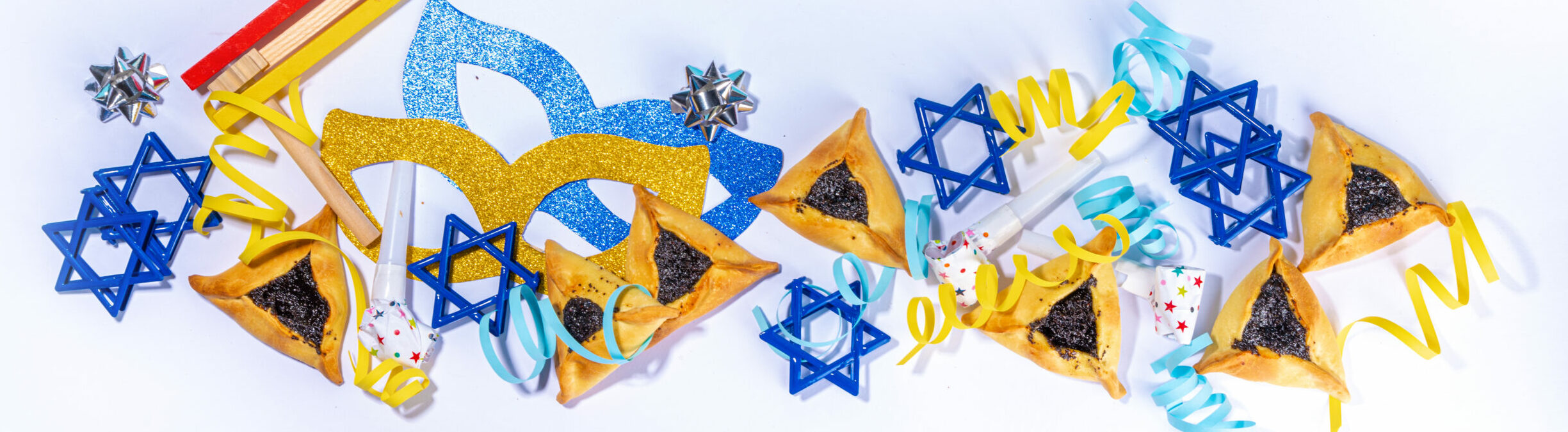
If there’s a holiday that embraces fun, creativity, and community, it’s Purim! Think of it as the ultimate Jewish costume party—full of meaning. Every year, we celebrate the story of Queen Esther’s bravery by dressing up, giving to others, and, of course, indulging in plenty of hamantaschen or, in Israel, oznei Haman. Ears (oznei) or hats (Taschen)? You decide!

At my house, the costume planning is eclectic. Over the years, my kids have worn everything from Alexander and Eliza Hamilton to a cloud, including a mermaid, a vampire, the Millennium Falcon (epic!), a shirt that said “This is my Human Costume, I am Really a Cat,” and a ladybug. Purim is the one day where the more creative (or unexpected) the costume, the better!

But Purim isn’t just about costumes. It’s also a time to fulfill four special mitzvot (commandments):
👑 Hearing the Megillah – The Book of Esther is read aloud, and every time Haman’s name is mentioned, we drown it out with groggers (or just really loud cheering and stomping!). You can make your own, or use egg shakers and other instruments in your home.
🎁 Giving Mishloach Manot – We exchange festive food packages with friends and family. These little bundles of joy—often filled with hamantaschen, fruit, and treats—spread sweetness and connection.
💰 Giving Tzedakah – Purim reminds us to give to those in need, ensuring everyone can partake in the joy of the holiday.
🍽 Enjoying a Seudah – The Purim feast is a time to gather, eat, and celebrate with family and friends. It’s a meal filled with laughter, gratitude, and (if you’re lucky) an extra round of hamantaschen.

Speaking of hamantaschen, I have to share my favorite recipe! If you’ve never made these triangle-shaped cookies before, this best hamantaschen recipe is the perfect place to start. Whether you go classic with poppy seed filling or get creative – I won last year’s contest at the J with Halvah Brownie – they are a Purim must-have.

We at Growing Jewish Families can’t wait to celebrate with you! Look out for Purim events happening near you, and be sure to stop by in your best costume—we look forward to seeing what you come up with this year!

Chag Purim Sameach!  Happy Purim!

Seeds of Community: Celebrating Tu B’Shevat

Forget the candles and cake, the Jewish holiday of Tu B’Shevat celebrates the “Birthday of the Trees” with fruits, nuts, and a deep appreciation for nature. One of the four Jewish New Years in the Hebrew calendar, Tu B’Shevat originally served as a practical marker for farmers in ancient Israel to determine when trees were old enough for harvest. Over time, it has evolved into a Jewish Earth Day, a moment to appreciate and care for the environment. Many people observe the holiday with a Tu B’Shevat Seder, enjoying fruits and nuts mentioned in the Torah while reflecting on the blessings of nature.

In my family, we mark Tu B’Shevat by planting parsley, which we (hopefully!) harvest for Passover. We enjoy the anticipation as we watch the tiny seeds sprout. And then share the awe as they grow into something we can later place on our Seder plate and use in our yummy matzah ball soup. We enjoy this annual tradition that connects us to the Hebrew calendar’s flow from holiday to holiday. The task is a small but meaningful ritual for each of us — that teaches patience and appreciation for both the natural world and Jewish traditions.

At the Pozez JCC, Tu B’Shevat is more than just a holiday—it reflects our values of feeling “Pride” in Judaism, “tikkun olam” (repairing the world), and “Learning.” We encourage families to celebrate in ways that feel meaningful, whether by planting something new, participating in a Tu B’Shevat Seder, or taking action to care for the planet. As we honor this day, we reaffirm our commitment to community, sustainability, and Jewish learning. However you choose to observe Tu B’Shevat, may it be filled with growth, renewal, and appreciation for the world around us.

How do you celebrate Tu B’Shevat? Share on your social media sites!

Global Jewish Peoplehood: Two Wars, Three communities and Chimney Cakes 

Impressions by Jeff Dannick, Matthew Berger and Zina Segal following their trip to Budapest in the frame of the JCC Global program FROM GOOD TO GREAT. 

This past summer, Matthew Berger, a Pozez JCC board member, was excited to learn about the JCC Global program “FROM GOOD TO GREAT.” This program invited JCCs across the USA to partner with JCCs in Ukraine and Israel. Matthew immediately saw the importance of the program: “The last couple of years have changed everything for the Jewish people. First, Russia invaded Ukraine, putting Jews and others at risk. Then, on October 7, 2023, Israel was attacked in the most brutal way. With that backdrop, we knew we had to act. We are only 15.8 million worldwide, and we must support each other.”

Jeff Dannick, who shared Matthew’s commitment to Jewish solidarity, quickly agreed to join the initiative. Understanding the challenges facing Jews worldwide, Jeff believes it’s crucial to support Jewish communities wherever they are. The Pozez JCC board approved the partnership, and in early December, Matthew, Jeff, and Zina Segal—who had a deep background in Russia and Ukraine—traveled to Budapest for the four-day retreat. They returned with new friendships, heavy emotions, and plans for the future.

The “FROM GOOD TO GREAT” program, funded by a grant from the Jewish Federations of North America, aims to strengthen JCCs in Ukraine by facilitating global cooperation with partner JCCs worldwide. Pozez JCC was paired with Hesed Besht (JCC in Khmelnitsky, Ukraine) and a community center in Beit Shemesh, Israel, for this three-year project. Over the retreat, participants met with colleagues from Khmelnitsky, Beit Shemesh, and other global JCCs to learn, build relationships, and discuss plans for future collaboration. 

Zina Segal, Sr. Director of Community Impact and Engagement at Pozez JCC, shared her thoughts: “It was heart-wrenching yet inspiring to be in that part of the world again. I met with old colleagues from Odessa and Ashkelon and provided context about Jewish Life in FSU (Former Soviet Union) to my current colleagues. While the program provided translation in English, Russian, and Hebrew, true partnership requires understanding the deeper context—why, for example, JCCs in Ukraine provide night nurses to the elderly or how a JCC with a $2 million budget supports 400 employees. These were realities I knew well in my own city of St. Petersburg.” 

Matthew was struck by the resilience of their Ukrainian partners. “Despite the war, they run multiple programs for several generations across four community centers with limited resources. Most of their funds go toward serving their community, especially the elderly.” He mentioned speaking with the JCC director from Zaporizhzhia, Inessa Nosenko, who was working to relocate classrooms to her center after a Russian attack destroyed a destroyed a local Jewish day school. “These JCCs are doing incredible work under unimaginable circumstances,” he added.

Jeff also marveled at the strength of both their Ukrainian and Israeli partners. “These communities are in the midst of war, and despite that, or perhaps because of it, they are resolute, adaptive, and creative. They remain warm, friendly, and engaging in ways that are truly inspiring.”

During the retreat, Zina had an interesting conversation with Yael Wolf, a lay leader from Beit Shemesh. “Yael had watched the show Nobody Wants This before attending and asked if the portrayal of American Jewry was accurate. We talked about Jewish identity, Reform and Conservative movements, and my personal experience as a Jewish convert. By the end of the conversation, she was fascinated by the diversity of Jewish expression in the U.S. and wanted to learn more about Jewish life in America and Ukraine.”

Budapest was chosen for its accessibility to participants from Ukraine, Israel, and the U.S. With its rich Jewish history, it was the perfect backdrop for the retreat. Jeff noted, “The Jewish community in Budapest has an incredible history and a promising future. The JCC in Budapest plays a crucial role in that community, and their CEO, Marcell Kenesei, is an inspiring leader.” Jeff fondly recalled his first experience tasting Chimney Cake, a local delicacy, which added a memorable touch to the retreat.

Matthew reflected on his upbringing in the Jewish community in Boston. “I grew up in the Boston area among many Jews, though my family was not religious. My parents grew up in communist Poland, and I had to find my own way to the more organized sector of the Jewish community. It turns out that many people I encountered in Hungary had the same experience: That first post War generation did not always promote their Jewish identity leaving it to my generation to rediscover it. I, for the first time in my 46 years, realized that my story was not unique and can now much better understand my place in the Jewish world.”

Zina shared her emotional experience in Budapest: “The city felt so much like home, it was almost painful. From the classical architecture to the Soviet-era constructions, everything reminded me of Saint Petersburg. On the last night of the program, we had dinner on a boat on the Danube. While we enjoyed the view of the city lit up for Christmas, Ukrainians discussed the Jewish school destroyed in a missile attack, and Israelis talked about the hostage situation. Yet, we also laughed together, planned our next meeting, and held both pain and joy in the same moment. That’s our Jewish superpower.” 

In the year ahead, all 31 participating JCCs from Ukraine, Israel, the U.S., and Latin America will continue collaborating to enhance the capacity and sustainability of war-affected JCCs in Ukraine. Through strategic planning, mentorship, and meaningful educational projects, the program will strengthen Jewish Peoplehood across the globe. Stay tuned for announcements about upcoming programs at Pozez JCC as part of the FROM GOOD TO GREAT initiative. If you’d like to get involved in this partnership, please contact Zina Segal.