Join the J in June to receive $109 off enrollment fee! Learn More.

Magic You Can Measure: The Transformative Impact of Sunrise Day Camp 

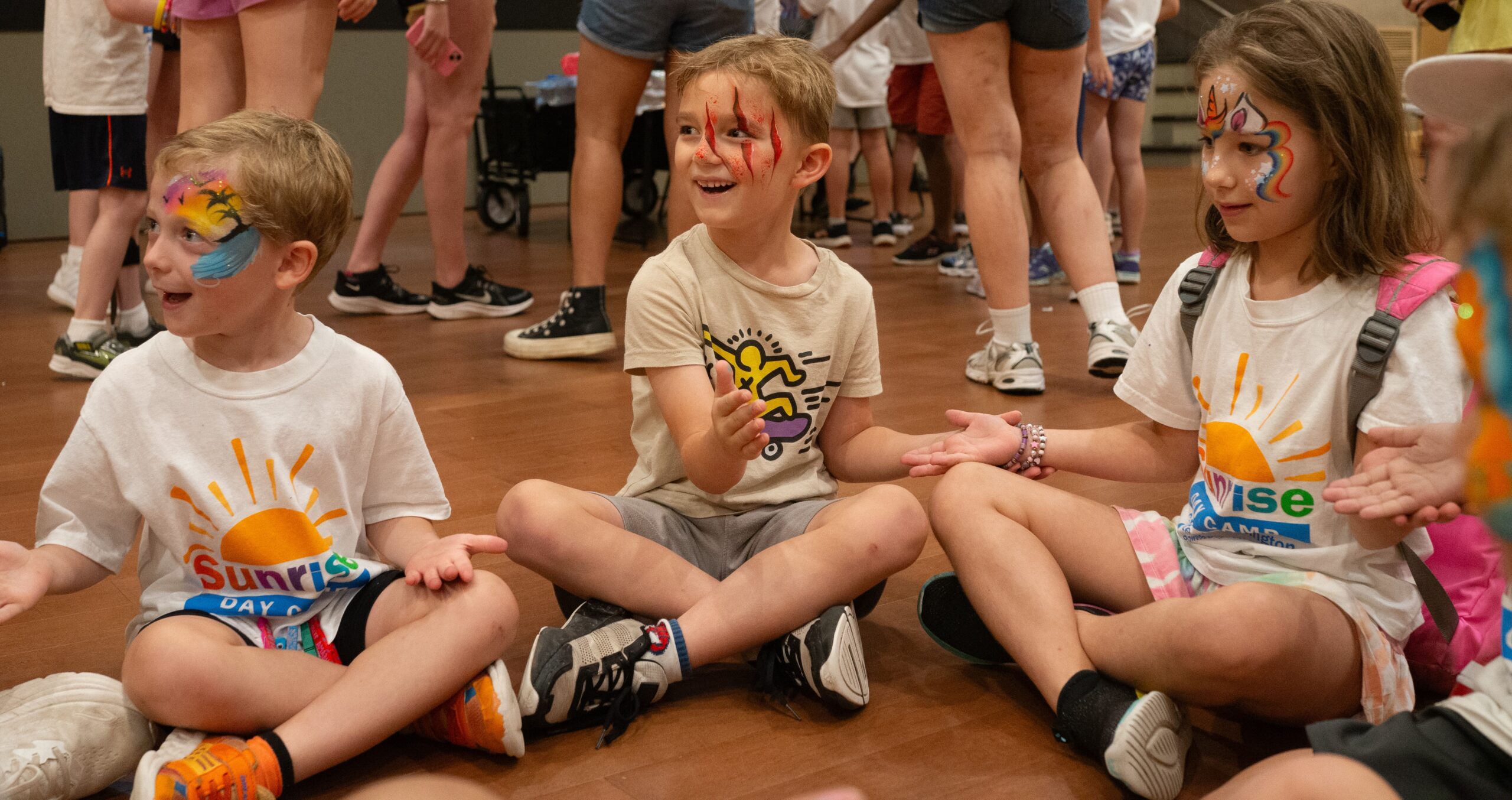
When most people think about families facing pediatric cancer, words like joy, magic, or hope rarely come to mind. Yet, these are exactly the experiences children and their families discover at Sunrise Day Camp, a free camp for kids with cancer and their siblings held at Pozez JCC.  

At the end of camp this year, we asked families to reflect on their children’s experiences — and what they shared was powerful.  “Sunrise has created magical moments and experiences from raw and heartbreaking situations,” shared camp mom Lindsay D.  

Her sentiment is not only felt by families but backed by research. Between June and August of 2024, the Sunrise Association partnered with researchers from Tel Aviv University School of Public Health to conduct a comprehensive study on the impact of Sunrise Day Camps. The study rigorously measured several core areas of children’s well-being — resilience, quality of life, stress and anxiety, sibling relationships, illness management, well-being, and self-esteem — to see if camp had a positive effect. 

Not only did camp improve resilience and well-being, according to surveys taken before and after the summer, but a third survey conducted 12 weeks after camp showed sustained improvements in key areas (Sunrise Association, 2024). That means that camp continues to enrich the lives of kids with cancer and their siblings long after they say goodbye to their beloved counselors and camp friends. 

While this study did not include our local Sunrise program, our families agree that Sunrise Day Camp improves their lives – especially in three significant areas. Unsurprisingly, their words align with the study’s findings. 

Camp reduces family stress and anxiety 

For families navigating cancer, daily stress can feel overwhelming. Sunrise gives children space to play, explore, and experience normal childhood joys  — and offers parents a rare moment of relief. 

As Ariane G. shared, having her children at Sunrise Day Camp “meant a lot to me, especially during chemo weeks when I could just focus on Daniel and not worry about what my other children were doing at home. Also, during tough weeks with multiple ER visits, it’s nice that my other children are busy at camp instead of worrying about their brother.”  

Not only do parents feel the Sunrise effect, but children carrying the heaviest emotional burdens also feel their stress ease and their spirits lift in the camp environment. 

Summer fun together improves sibling relationships  

Sunrise Day Camp prioritizes creating a space where siblings can be silly, play, and enjoy each other — even when treatment realities feel heavy. Parents say that camp allows their children to bond with each other and feel like kids again. The study highlights that camp meaningfully supports sibling relationships, easing tensions and strengthening family unity. 

This return to normalcy helps siblings reconnect and build stronger bonds, even during the most challenging seasons. 

Sunrise Day Camp builds resilience in campers and their families 

Some families at Sunrise face unimaginable loss, while others are in the midst of grueling treatment. In every situation, Sunrise helps children and siblings build resilience as they navigate hardship. 

The Sunrise Association’s impact study reported that “resilience increased significantly across the board, with children leaving camp more emotionally equipped to handle adversity.” This held true for both diagnosed campers and siblings.  

Sunrise makes long-term connections with its families, who are welcomed back at Sunrise Day Camp year after year — including siblings who continue attending after the loss of a brother or sister. 

“Last year, our eldest son attended while battling brain cancer. Sunrise gave him a place to just be a kid, surrounded by understanding, compassion, and fun,” a camp mom shared. “After his passing last September, it meant the world to us to see his siblings welcomed back with the same warmth and joy he experienced. We cannot thank the camp staff enough for the kindness, energy, and heart they pour into this program. It has brought happiness to our children during both the hardest and most hopeful seasons of our lives, and we will always be grateful.” 

Your support of Sunrise supports the well-being of entire families 

The numbers don’t lie: The magical experiences families describe at Sunrise Day Camp are not only deeply felt but also have a measurable, transformative impact on the well-being of children with cancer and their families. 

Sunrise Day Camp relies on the generosity of our community to offer this amazing service and support to families impacted by pediatric cancer. We do not charge families a single dollar to attend camp. Every moment of joy, every friendship formed, every boost in confidence is made possible because of community members who care.  

Your support will help Sunrise ensure that the magic of camp continues to brighten the lives of children with cancer and their siblings year after year. It costs $6,000 to give one child a full summer of camp and year-round programs — your gift can make that possible. 

Donate now: https://give.thej.org/campaign/637140/donate  

Hakarat hatov: A Jewish gratitude practice for Thanksgiving

 As Thanksgiving approaches, I am reminded of the power of the Jewish value of hakarat hatov, looking for the good.  When the seasons change and I miss the warmth of summer, hakarat hatov reminds me to see the beauty in the world through the changing colors of the leaves.  When life feels hard, simple things, like my favorite lavender soap or a minute of sun on my face, bring a smile to my face and help me keep a positive attitude. 

Hakarat hatov, like any gratitude or positive-thinking practice, challenges our hard-wired negativity bias as humans who are conditioned to scan our environment for threats. Jewish sages must have understood the need for a regular practice to build our gratitude muscle, and so hakarat hatov is built into Jewish tradition. Every morning, the Modeh Ani prayer reminds us to be grateful, and prayers of gratitude are included in every holiday.   

As simple as it sounds, daily gratitude practices are powerful. I am amazed at the peace and calm that settle over my children and me when we focus on specific things we are grateful for at the end of the day. The practice even sets the stage for better sleep. As a life coach, I witness how my clients shift perspectives after adopting regular gratitude practices and how they find growth and energy when they look for the good. 

As Thanksgiving approaches, what regular gratitude practices can you lean into?  What are you grateful for today, this week, this month, this year? 

This year, I am grateful for the community I have found at Growing Jewish Families and the larger Pozez JCC of Northern Virginia.  As the new J-Family Ambassador Program Manager, I have been uplifted by the passion, values, and hospitality that overflow from the JCC’s staff and programming.   

Growing Jewish Families cultivates community by connecting families raising young children in a Jewish environment in Northern Virginia. The team of J-Family Ambassadors works to build community among young Jewish families by region by bringing gift bags to new parents, connecting with parents over coffee, creating online communities, and hosting family events focused on joyful Jewish learning and socializing. 

If your family has a child up to age 6, one of our J-Family Ambassadors is eager to welcome your growing family into our Jewish community. Here’s how you can get connected: 

 
Don’t have young kids? You can help families connect to their Jewish heritage and our community with your year-end gift to the Pozez Jewish Community Center. Donate here

Cultivating Empathy in the ECLC: Empowering Conflict Resolution and Repair with Young Children 

“Say you’re sorry.” 

“Give a hug.” 

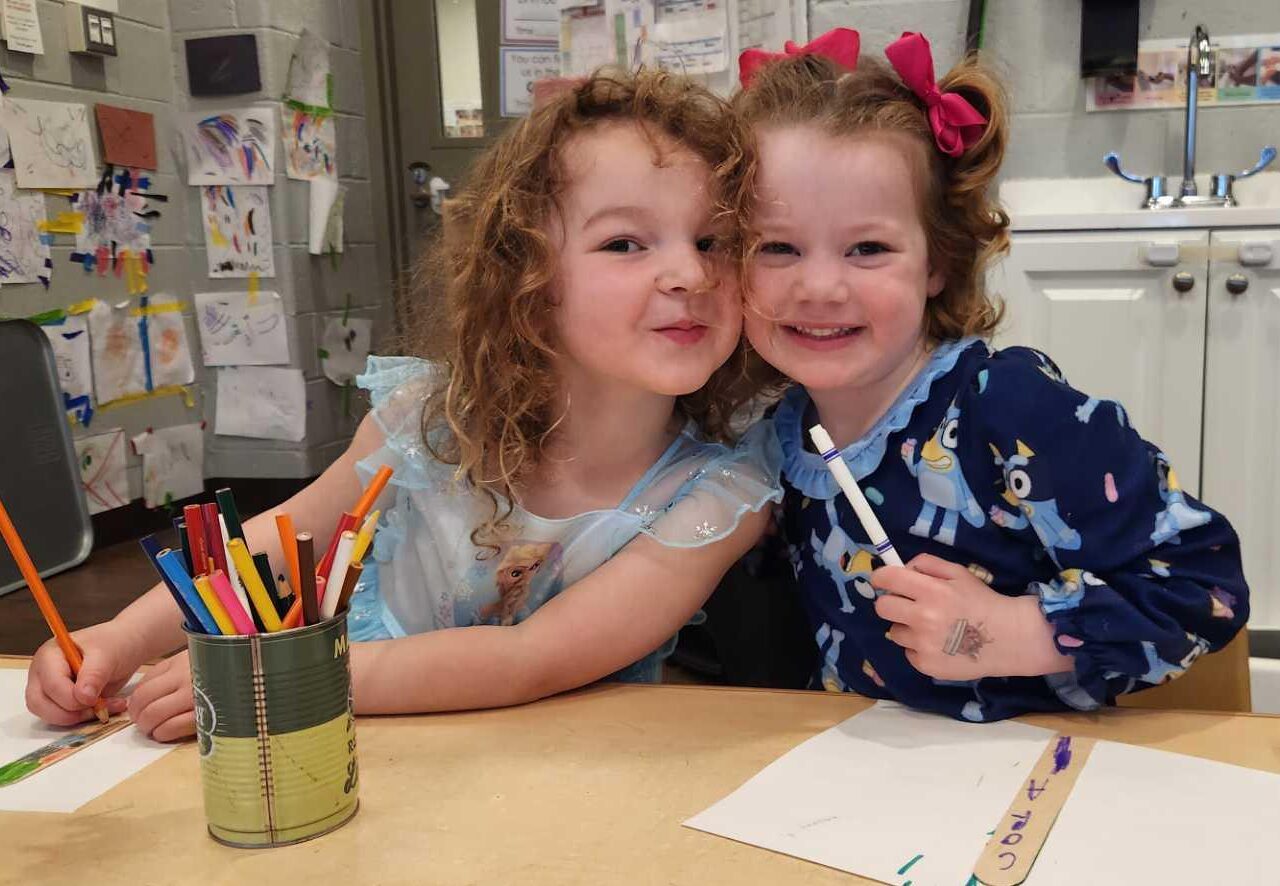
These are typical adult responses when conflict arises among young children. But are they the best instruction for developing brains? Within the ECLC, Pozez JCC’s Early Childhood Learning Center, we have spent a lot of time reflecting on what it really means to just say sorry when one child upsets or hurts a peer. 

The word “sorry” to young children (not to mention to many adults) is merely a word said to excuse whatever wrong was done. In my role as an educator and the ECLC’s Pedagogista, I have witnessed many a child, once prompted to say “sorry,” run off to happily engage in something else, while the other child remains hurt and upset.  

Telling children to “give a hug” to resolve conflicts presents additional concerns. Young children are developing foundational understandings of selfhood, bodily autonomy, and agency. While hugs can be a wonderful means of connecting, forcing hugs as a means of resolving conflict can have the opposite effect, especially when it disregards the child’s level of comfort with physical touch.   

So how might we more intentionally address altercations between young children? The ECLC educators have been developing an approach to conflict resolution and repairing harm that takes inspiration from restorative justice practices and principles. Restorative justice centers on relationship repair, accountability, and the needs of all involved parties.  

What does this practice look like? Say Rachel knocks down Eli’s block tower. An adult will prompt Rachel to check in on her distraught friend, giving her the words to ask: ”Are you ok?”  

Space is then held to listen to Eli’s response. If he replies “no,” the next step is for Rachel to ask,“What can I do to make you feel better?” This allows her to hold accountability and seek to repair the harm done. 

Again, space is given for Eli to respond. This is a critical part of the process, ensuring that his expressed needs are heard. He may state that he’d like Rachel to apologize or request that she help him rebuild the toppled tower. Frequently, I’ve heard a child state that they want the other to “be more careful” or “try not to do that again.”  

In this scenario, the adult facilitators would also check in with Rachel to address her needs, as well. They might say, “I saw that you knocked over Eli’s tower. Were you wanting to play with him? We can ask Eli if you can join in his play, or maybe you can build your own tower to knock down.”  

Addressing conflict and harm in this way inevitably takes more time and effort to facilitate than simply telling children to “say sorry.” Yet overwhelmingly children from the ECLC’s 3s and 4s classes have adapted to this new approach. While some children need an adult to model the check-in process for them, by midyear, most children can actively facilitate this themselves. It’s a truly remarkable transformation to witness!  

Through this process, the children can practice problem solving and explore how to better relate together. In a global state of increasing polarization, the ECLC’s hope is that a foundation can be built in this youngest generation that centers on a value of relationships, a recognition of the interconnectedness of us all, genuine care for repairing harm and resolving conflict, and a cultivation of empathy to support a better world.  

Young children have a miraculous way of revealing to us as adults what it really means to be human. If they can learn these important skills, so can we. 

—– 

At the Pozez JCC’s Early Childhood Learning Center (ECLC), we cultivate curious, confident learners. Inspired by the Reggio Emilia approach, our nurturing environment fosters each child’s social, emotional, cognitive, and physical growth through rich, interactive experiences. We embrace Jewish values within a universally inclusive curriculum, recognizing every child as capable, competent, and deserving of respect.  

Support our mission to nourish the growth of our youngest learners with a donation to the JCC or contact the ECLC to set up a tour of our licensed preschool and childcare facility. 

Conversations with the Curator: Annual Open Exhibition

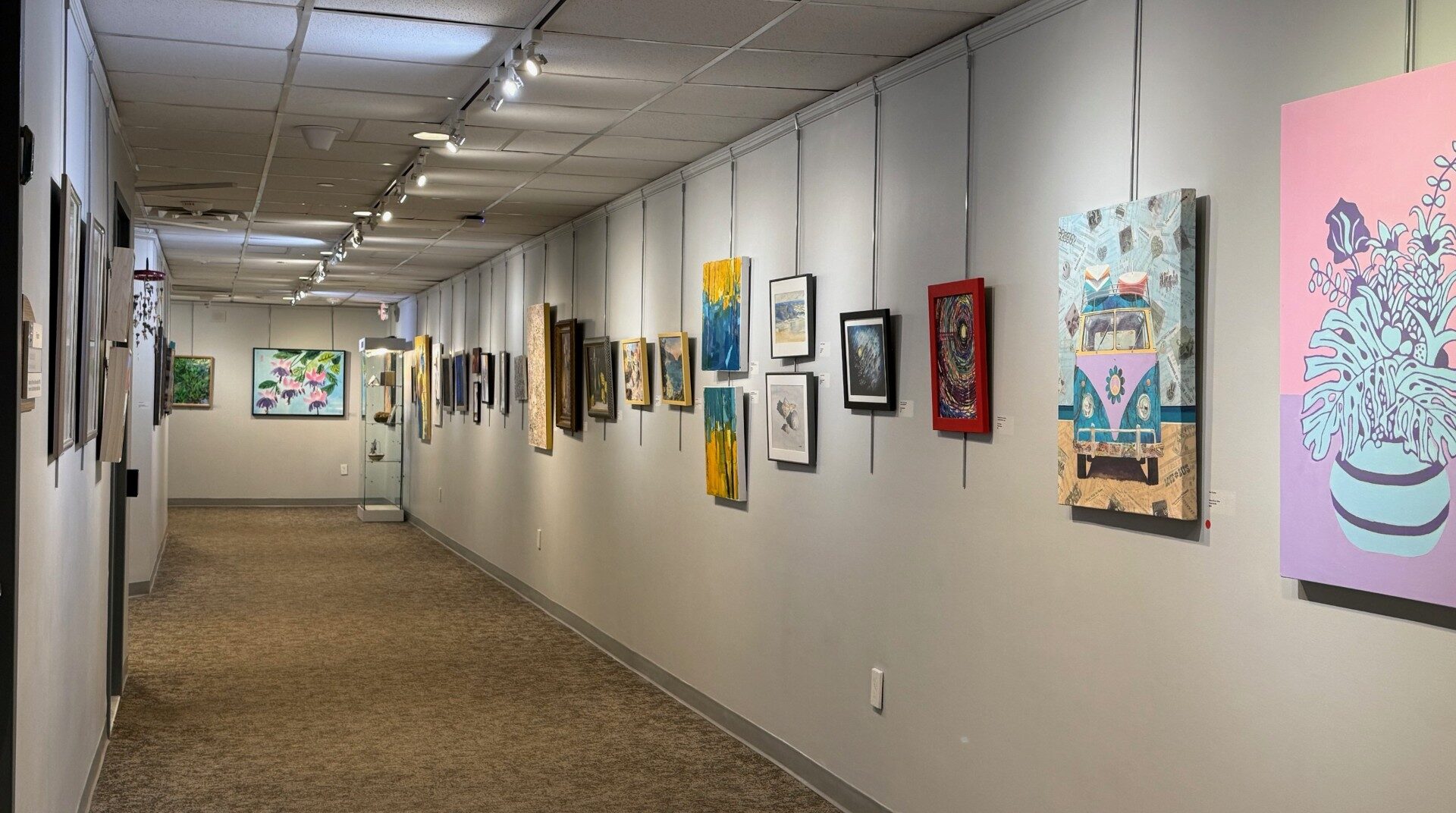
In the Bodzin Art Gallery October 28 – December 15, 2025 
Each year, the J seeks fine art and craft to feature in its Annual Open Exhibition, highlighting the creativity and talent within our community. This unjuried show is open to all artists 18+ who are members, staff, or friends of the J.  

This year, 27 artists are showing their creations, and each has a unique approach to making their art. Sarah Berry, the curator of the Bodzin Art Gallery, interviewed three returning Open Exhibition artists to learn more about why this exhibition is important to them. 

“Community is such an important concept for Jews,” says fiber artist Rachel Braun. “I love being part of a community of artists. Visiting the exhibition and seeing the variety of expressions, the choice of themes, and the engagement with raw materials is astonishing, and it mentally expands my relationship with my own medium.”  

Rachel Braun had a solo exhibition, Embroidery and Sacred Text at the Bodzin Art Gallery in 2019 to dovetail with the release of the same-titled book of her Judaic needlework, and continues to enjoy showing at the J.  

“It is important to me as a Maryland resident to be participating with the Virginia Jewish community,” Braun says.  “We are incredibly lucky in the DC area to have a broadly unified community. It’s a tough time in the Jewish world right now, so being in community with one another shores up our sense of klal Yisrael — our inseparability and mutual devotion.” 

Kelly Snyder, a self-described “eclectic artist that creates on whims,” has shown in several previous Open Exhibitions and in Choosing Peace, an exhibition mounted in the Bodzin Art Gallery in 2022 in partnership with the Fairfax Art League. “I am drawn to making art that is fun and playful, and I love that all ages get to admire the art at the J,” says Snyder.  “I once heard that a child was admiring one of my pieces and it made my day!” 

Longtime member Marilyn Feldman talks about her connection with the J fondly, saying “I definitely have a long-term personal relationship with the J! We live close by, our children grew up here, and now I spend quite a lot of time here. The Bodzin Art Gallery is an integral part of the J, and the open exhibit is of particular importance as it provides the member artist an opportunity to visually communicate with the viewer  –  fellow J  members and guests, lots of them.”  

Marilyn is a ceramic artist, creating functional hand-built pieces. She has participated in many of the Open Exhibitions over the years. “In December 2024 a woman said to me, ‘I bought your piece because it spoke to me.’ An artist can’t ask for anything more.”   

The 2025 Open Exhibition features work in an array of media, including photography, ceramics, painting, paper arts, fiber, and more.  

Participating Artists, 2025: 
Larisa Ayash, Joel Boches, Rachel Braun, Eric Coulter, Spoorthi Dandridge, Marilyn Feldman, Jim Finkel, Bill Firestone, Nataliya Gurshman, Melinda Hofstetter, Michele Holtzman, Jinny Isserow, Alan Kolnik, Richard Levine, Naomi Lipsky, Lisa Miller, Catherine Mommsen Scott, Sylvie Muldoon, Sophia Pineda, Alyse Radenovic, Melinda Roth, Cynthia Schoeppel, Kelly Snyder, Monica Tucker-Harley, Sarah Vejvoda, Varia Voloshin, Elizabeth Wassel 

Curator, Sarah Berry, and the Community Impact and Engagement team invite you to visit the Bodzin Art Gallery and enjoy the Open Exhibition and the artistic and community spirit that thrives here. 

—————————— 

Your support will help us bring diverse and inspiring cultural arts programs to our community. By donating to the Pozez JCC’s cultural arts programs, you will make it possible for us to host events and showcase a variety of artists and exhibits, including those in the Bodzin Art Gallery. Your contribution directly enriches lives through the power of art.  
Donate Now