Join the J in June to receive $109 off enrollment fee! Learn More.

Building a Culture of Philanthropy: A Gift to Sunrise is More Than a Number

When you consider giving a gift to Sunrise Day Camp–Greater Washington, you might begin with a number. Maybe it’s $18. Maybe it’s $1,800. 

Numbers, however, don’t capture the real impact of your gift. They’re a marker of sorts and intangible, and don’t connect you to the people on the other side of the donation. 

Now imagine if instead of gifting a number, you were making possible: 

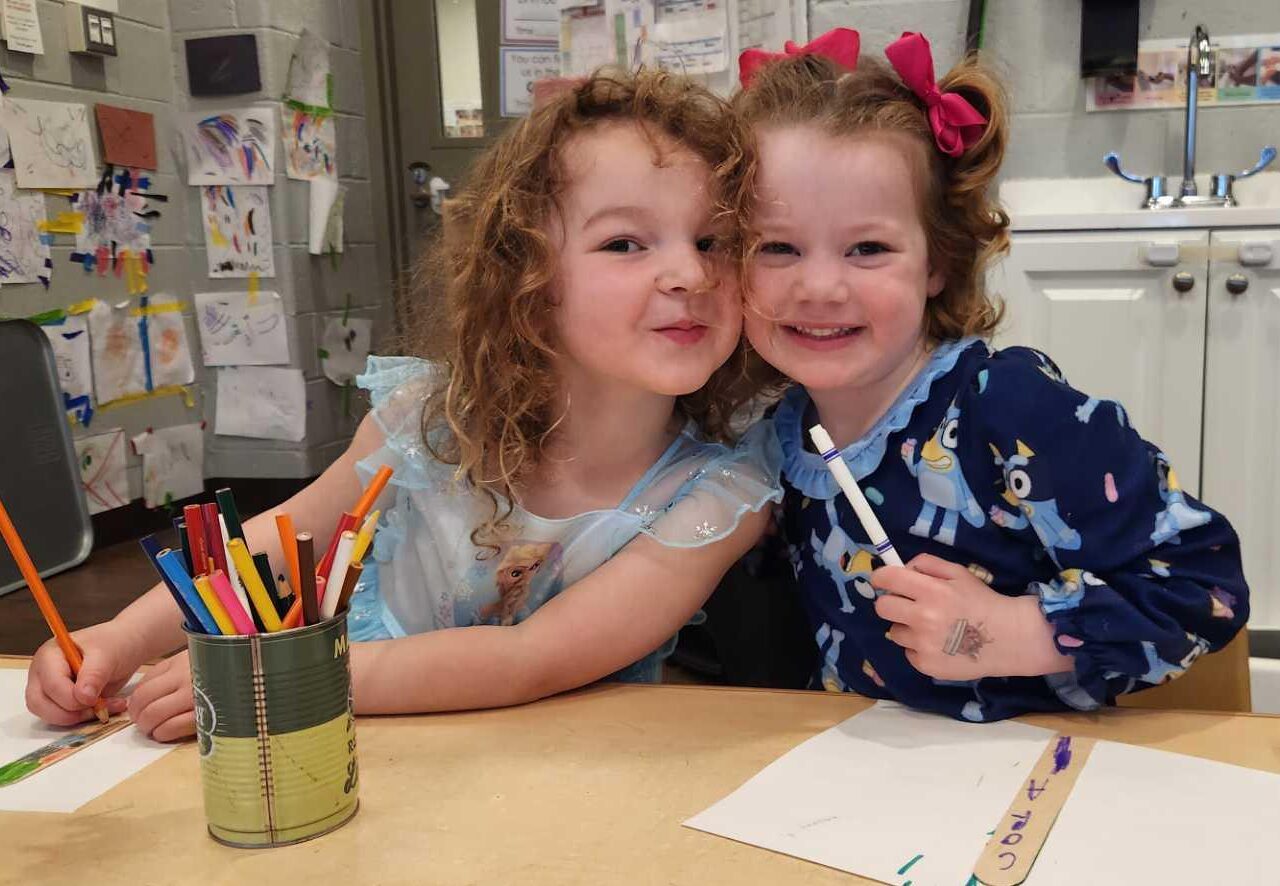
  • Six weeks of joy, friendship, and normalcy during treatment for a child facing pediatric cancer 
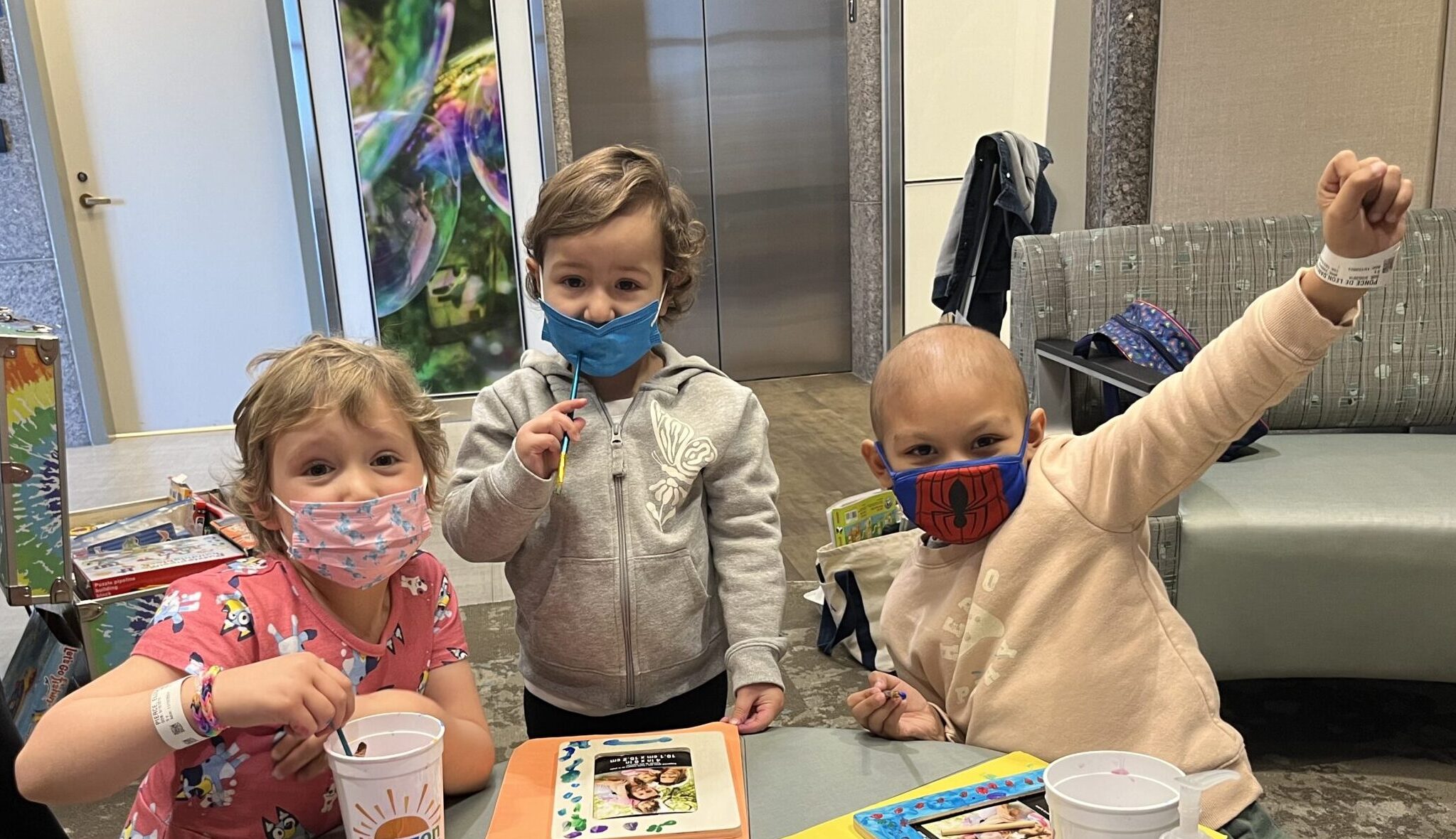
  • A scary hospital visit transformed into a fun afternoon of games and crafts  
  • Weekend outings that let families spend meaningful time together 
  • The giant smiles and messy fingers that come with an immersive art activity 
  • A chatter-filled bus ride that takes one more to-do off a harried parent’s list 

When donors understand the impact of their gifts, generosity becomes deeply personal. No gift is too small when it becomes part of something transformational.  

When we see the positive effect we can have on the people around us, we begin to build a culture of philanthropy where giving becomes one of many ways we connect. 

Seeing the Impact Firsthand 

Community members have many ways to experience the impact their gifts to Sunrise Day Camp–Greater Washington have on Northern Virginia families. 

Camp tours: One of the most powerful ways to understand Sunrise is to experience camp in person. Sunrise Day Camp will host camp tours daily between June 29 and August 7. Supporters and community members can witness the direct impact philanthropy has on children and families facing pediatric cancer. 

To schedule a tour or learn more, please contact Melanie Bomberg, Development Manager, at Melanie.Bomberg@theJ.org

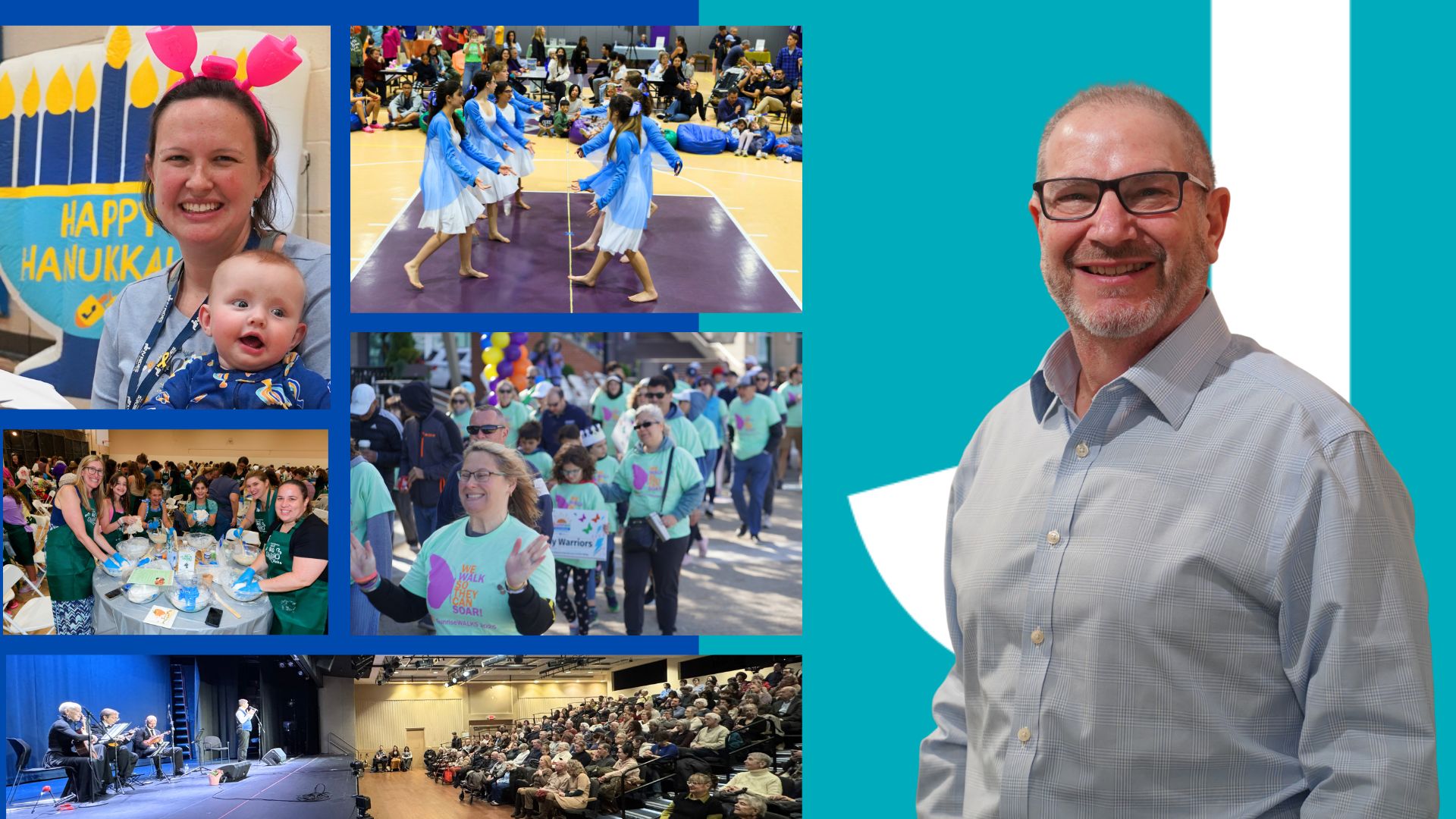
SunriseWALKS: The Sunrise community is already looking ahead to our fifth annual SunriseWALKS at National Harbor on Sunday, October 18. SunriseWALKS is more than a fundraiser — it is a celebration of community, resilience, and the children and families at the heart of our mission. Every step taken and every dollar raised helps ensure that Sunrise can continue providing camp, hospital programming, and year-round experiences free of charge to every family we serve. 

Register, form a team, donate, or help spread the word at: https://sunrise-walks.org/GreaterWashington 

Every Gift Matters 

A culture of philanthropy is built when people understand that their generosity has the power to change lives. 

At Sunrise Day Camp–Greater Washington, every donation helps create laughter in hospital hallways, confidence on the camp stage, friendships that extend beyond diagnosis, and experiences of childhood that every child deserves. 

Because when you give to Sunrise, you are not simply funding a program. You are giving children the chance to experience the magic of being a kid again. 

And that’s so much more meaningful than a number.

A Year of New Connections: Looking Ahead with Jeff Dannick

The new year is coming — the fiscal new year that is.

This marks a significant moment at the J, a designated time to think big, reset our strategy, and ensure we continue to do all we can to build Jewish community in NoVa.

To prepare for a new year of meaningful programs, community partnerships, and innovative, out-of-the-box initiatives, we spoke with Jeff Dannick, Executive Director of the Pozez JCC (the J). Below are highlights from our conversation about his priorities and vision for the J as a convener of Jewish life in Northern Virginia.

Q: The J’s fiscal year starts this summer. What are your primary goals for 2026-2027?

A: The first piece is expanding our reach into the broader Jewish community across Northern Virginia. That means working closely with partner organizations, synagogues, Federation, Gesher JDS, and others to be the connective tissue of Jewish communal life. We want to meet people wherever they are and help them find meaningful ways to engage. That includes creating ways to help them become connected to other community members, or create or join a microcommunity. That could also include connecting them to a Jewish institution. We need to provide all kinds of support.

The second piece is what we do inside of our building, that is how we deliver our existing programming, what we do to grow our membership, the effort we make to meet the changing needs of our community, and how we lean into the tension and discomfort of our times with thoughtfulness and respect.

Q: You mentioned leaning into tension and discomfort. What does that look like at the J?

A: We are creating a big tent, where people with differing backgrounds and views feel comfortable expressing themselves in a safe, respectful environment. We want to help people learn how to have difficult conversations. How to argue without being argumentative. How to disagree without being disagreeable. 

For example, how do we support Israel in ways that align with our values? Those tensions, I think, are more critical than ever in our Jewish community. And if we’re going to come through this period of increased antisemitism and conflicts around the world, we have to figure out how to be together in community and recognize what holds us together rather than what divides us.

Q: What new initiatives or partnerships are in development?

A: One particularly exciting initiative has been three to four years in the making. We’re preparing to launch JLive, a new digital platform in partnership with The Jewish Federation of Greater Washington. Jewish organizations across the region will be able to post events, programs, and opportunities. Users will be able to search based on their specific interests, life stage, and geography, making it easy for them to discover what’s happening throughout their Jewish community.

Our hope is that this platform will become a centralized hub that connects individuals with opportunities while also giving organizations valuable insights into what the community is looking for. More to come!

Q: Social impact seems to be a growing focus for the J. Why is that important?

A: We believe many people express their Judaism through the ways they live their lives and the impact they have on others. For some, living Jewish values means participating in synagogue life or observing rituals. For others, it means tikkun olam, repairing the world through service, advocacy, and acts of kindness. We want the J to be a place that supports both and helps more people engage with Jewish life through social impact opportunities rooted in Jewish values.

Q: How will the J continue to engage younger generations and those who may feel less connected to Jewish communal life?

A: Younger generations are often looking for opportunities to make a difference in our world, so we’re exploring more ways to connect Jewish engagement with social impact, volunteerism, and microcommunity building.

At the same time, we recognize the needs of families raising young children differ from those of single adults or couples without children. So we’re trying to do a lot of listening this year to understand what it is they’re looking for and figure out how we can deliver it.

Q: You’ve mentioned efforts to create microcommunities. What are you envisioning?

A: Microcommunities can cut across generations and bring people together. One microcommunity we’re exploring is for parents. While there are many strong programs focused on engaging children and young families, we’re hearing that parents themselves need more support, whether around stress and anxiety, developmental or mental health challenges, or navigating the realities of parenting at different stages.

We’re envisioning a parenting center without walls, a collaborative, community-based support network developed in partnership with other organizations throughout Northern Virginia.

Q: What challenges do you anticipate in the coming year?

A: Like many organizations, we continue to navigate financial challenges stemming from COVID-era disruption, broader economic pressures, and changing patterns in how families live and engage in Jewish life. At the same time, global instability, from conflict in the Middle East and Ukraine to rising antisemitism, continues to affect our community in profound ways. We have to remain agile, thoughtful, and responsive while also strengthening our financial foundation through membership growth, fundraising, and program revenue.

Q: The J has long welcomed not only Jewish residents but people of all backgrounds living in NoVa. Why is inclusivity such a central part of the mission?

A: The J is a welcoming space for all. Being open to people of all faiths or no faith is foundational to the JCC movement and has always been part of who we are.

Just to point out a few examples: There is NV Rides, which connects volunteer drivers with older adults in need of transportation. To make this happen, we team with 14 partner organizations, many of which are faith-based and diverse. Another is Sunrise Day Camp, which is a free summer camp for children with cancer as well as their siblings. You don’t have to be Jewish. You don’t even have to live in Northern Virginia. The camp serves the entire DMV.

People need to know they have a community. And in fact, if we go back to our conversation about antisemitism, I personally believe the Jewish community cannot solve antisemitism. What we can do as a Jewish community is demonstrate to people of all backgrounds and faiths that we are a warm, welcoming people who care not only about the Jewish community, but the entire community. And that we want to live in partnership and in collaboration and in mutual support with all of our neighbors and friends. That’s core to what the Jewish community is about, and it’s absolutely central to the J.

Q: What do you most want the community to understand about the J?

A: We want people to think beyond the building. When many hear JCC, they think of a physical place. But increasingly, we see ourselves not just as a Jewish Community Center, but as a Jewish Community Connector.

The Northern Virginia Jewish community is so large and so spread out that having just one brick-and-mortar location is never going to be convenient for our entire community. We want to and need to connect Jewish life across the region through partnerships, programs, digital tools, microcommunities, and relationships.

We envision a Jewish community of Northern Virginia that even if it doesn’t have a geographic gravitational center, has a real sense of a collective Jewish community, where we support one another and where we embrace one another. And we’re on a path to achieving that. It’s a long road, for sure, but there’s a lot of opportunity for more engagement.

Q: What message would you like to leave people with?

A: In spite of all the challenges facing the world today, I want people to find joy in living their Jewish lives. We want to hear what people are looking for, what support they need, and how they want to engage. We are not prescriptive. Our programs often come from a kernel that we hear from somebody in the community, and then we try to respond. Many of our best ideas begin with listening.

Also, I want people to keep in mind that the J is a welcoming space. J programs, whether in the building or out in the community, are very safe places for people of varying faiths and families of multiple faiths to engage with Jewish community, with other Jews, and with other people in similar life stages.

And if there are more ways that we can help support our community, we are all ears.


The J is a vibrant space, welcome to all who walk through our doors. The J is also a community that reaches beyond walls and across miles. You can support our momentum and our mission, in our building and out in our community, by making a gift.

The Yoms: An American and Israeli Perspective


We, as a Jewish community, are readying ourselves for holidays that call on us to hold joy and sadness at the same time. They are The Yoms: Yom HaShoah, Yom HaZikaron, and Yom HaAtzmaut.

At sundown tomorrow begins Yom HaShoah, or Holocaust Remembrance Day, which commemorates the millions of Jewish lives stolen by Nazi terror and lifts up stories of Jewish resistance. A week later is Yom HaZikaron, Memorial Day for fallen soldiers and victims of terror in Israel. And then, just 24 hours later, comes Yom HaAtzmaut, Israel Independence Day — linking the very existence of the State of Israel to those who risked everything for it.

Here at the J, we create space with intention, encouraging our community to sit in our pain, learn with and from one another, and engage with remembrance to process our emotions and power our resilience.

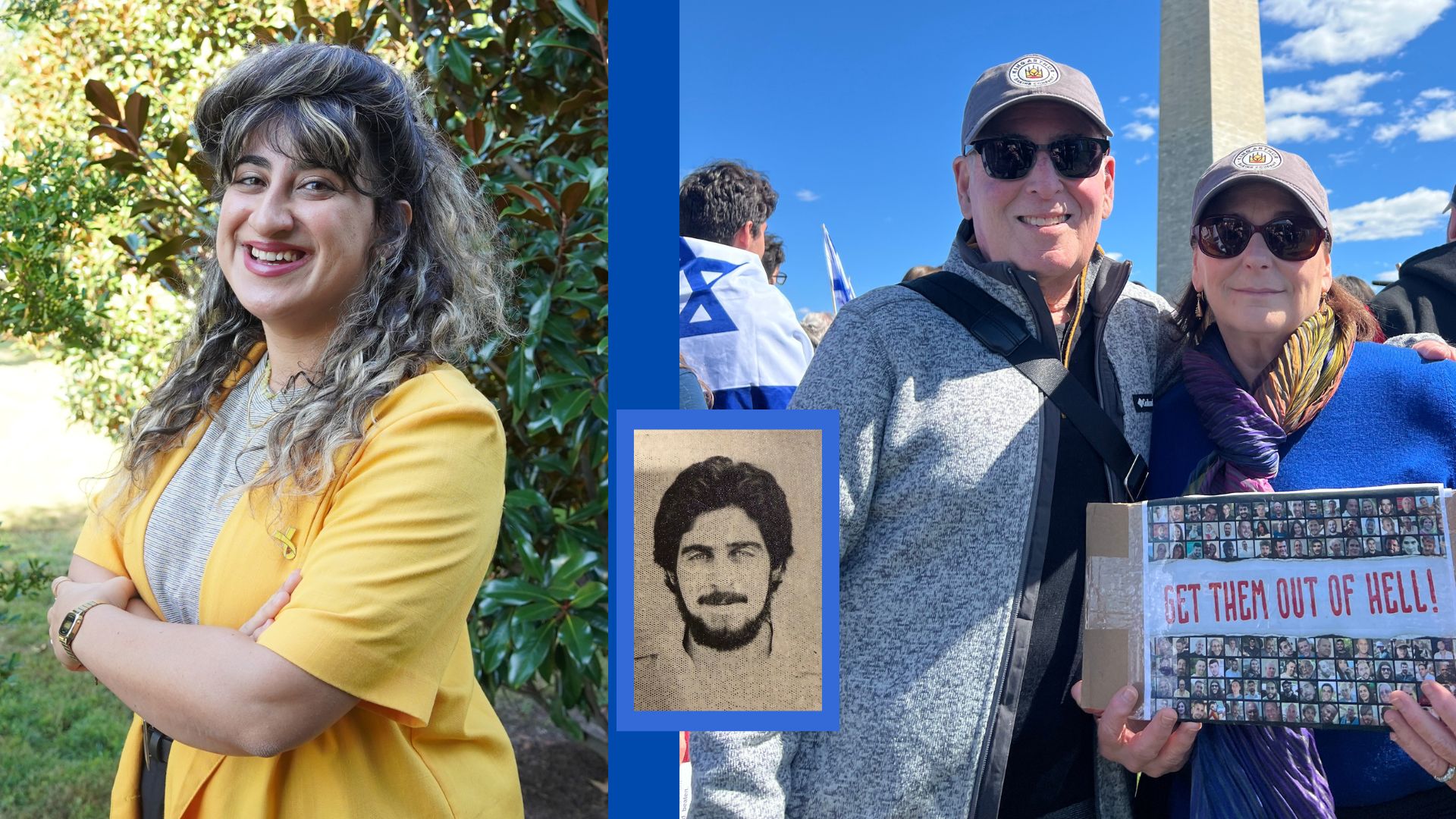
The coming days will be meaningful and challenging for our community. To give perspective, Chen Sara Mordechai-Kedar, our shlicha (Israeli emissary), and David Selden, a philanthropist and lay leader with a long-standing commitment to Jewish life, share their experiences on The Yoms and reflect on personal moments of commemoration and celebration.


From Stories to Memory

Our shlicha Chen Sara Mordechai-Kedar is a self-described “Tel Avivian girl” who grew up in Rishon LeZion, a city on the shore of the Mediterranean Sea.

Every year — on the same day, at the same time — she heard the tzfirot, the sirens marking Yom HaZikaron. The first one sounded at sundown, lasting for one minute. The second one blared the next morning for two minutes.

During those moments, all of Israel stopped. Traffic came to a halt. No one moved or talked. Everyone stood in stillness and silence.

“As a kid, you try to be very serious and do this, but sometimes you end up laughing because you’re embarrassed. You’re only starting to understand the rules and experiences of your country,” Chen said. “But when you grow up, and especially after army service, this day completely changes for you.”

As Chen, now 32, grew older, she felt the weight of loss. Yom HaZikaron was no longer a secondhand experience, lived through stories told by a parent or a sibling. She had served as a commander in the Israeli army. She had stories of her own and people she held in her heart on Yom HaZikaron.

“This wasn’t my family’s sadness anymore; it was mine,” Chen said. “I could stand and think about people I knew who died. Suddenly this tzfira, this alarm, was very, very meaningful for me. And I couldn’t imagine hearing a kid laugh during it.”

And now, especially after October 7, transitioning from Yom HaZikaron to Yom HaAtzmaut is a greater challenge.

“Even when everybody is celebrating in the streets,” she said, “I always remember that it’s not so easy anymore.”

For Chen, this year will mark her first time teaching on The Yoms. She is helping to organize a series of programs, including a Taste of Israel, a celebration of Israeli culture and community, and Pass the Trauma, Please, an author talk with second-generation Holocaust survivor Todd Diamond about the effects of generational trauma, loss, and legacy.

Chen plans to draw on her own experiences to help our community learn and tap into the hope of the Jewish people.

“If you have a place like the J that can accept everyone, where everybody’s welcome to come and tell other people in the community what they feel, then that is a very meaningful place,” Chen said. “Here, people can show up and say what is on their hearts.”

Holding Grief, Holding Hope

David Selden, a lifelong philanthropist and poet, was raised in a Zionist home. He was surrounded by stories. Many he wrote himself. Others were passed down, like the story of his grandfather, who escaped persecution in Poland and found refuge in what is now Israel.

“Foundational experiences don’t leave you,” he said. “They persist and they grow and they reform.”

He had many of his own foundational experiences in Israel, beginning in 1973.

David, now 71, was a long-haired college kid in Massachusetts on October 6, 1973 — the beginning of the Yom Kippur War in Israel. He wanted to help, and after speaking with his parents, he went to Israel to volunteer.

His new home was Kibbutz Manara, perched on the northern border of Lebanon. He tended chickens and dodged rockets. He refused to speak English because he was determined to learn Hebrew. Using his arm as a sort of dry erase board, David wrote down Hebrew words so he would not forget them.

“Kibbutz Manara. I live there in my memories,” David said. “It bound me to the people. To history. To my place in that history.”

He stayed long after the war and was there for The Yoms, in a small apartment with his host family and a visitor. On Yom HaZikaron, the visitor wailed louder than the siren, David remembered. He had lost his only son in the Yom Kippur War.

“I can hear him now,” he said. 

Remembrance is personal in Israel, as everyone knows someone who has been killed in uniform or in a terrorist attack. Across a small country where nearly every citizen has to serve to mitigate security threats, loss and sacrifice are a part of daily life.

“From the sirens to the community to the very feelings of those who have suffered the greatest loss of all,” David said, “there’s a lot to be learned by how Israelis mourn together in ways that you can only learn by doing.”

He remembered another moment in Israel: visiting Yad Vashem, the Holocaust museum. David stood before a memorial honoring children who were slaughtered, and then, he stepped outside.

“I saw the hills. I saw life,” David said. “I could express gratitude and look at a future that’s still there and evolving.” 

Then and now, David navigates the tension of The Yoms as he does every day: with poetry. Some of his recent poems have been influenced by the devastation impacting Israel and its neighbors. He said reality will challengeour search for light on The Yoms — but we must look for it.

“The idea of still finding that joy and fulfilling that catharsis, that mandate to express joy, is going to be incredibly challenging given what is going on. But we will do it. Because we are human beings. This is what we do.”

Affirmation
A poem by David Selden

As our world shudders and contorts
physics, heartaches erupt
as old volcanos sometimes do,
buds in dormant trees
peek out, seeking sun’s blessing,
we remain fixed on the given,
not the taken

The J continues to thrive because of Jewish leaders like Chen and David and because of generous donors like you. Your support ensures the J remains a place where we can be together in joy and sadness as we honor The Yoms. To continue sustaining our community from generation to generation, make a gift of your own.

How saying ‘yes’ makes a difference to Sunrise families facing pediatric cancer 

Last weekend, the Pozez JCC and Sunrise Day Camp – Greater Washington answered with a resounding “yes!” to our campers’ most-asked question: “Can we have more camp?” 

The Camp YES Day event, one of Sunrise’s monthly Family Fun Day activities, brought back that magic summer feeling with a chance to revisit everyone’s favorite camp activities outside of the camp season. 

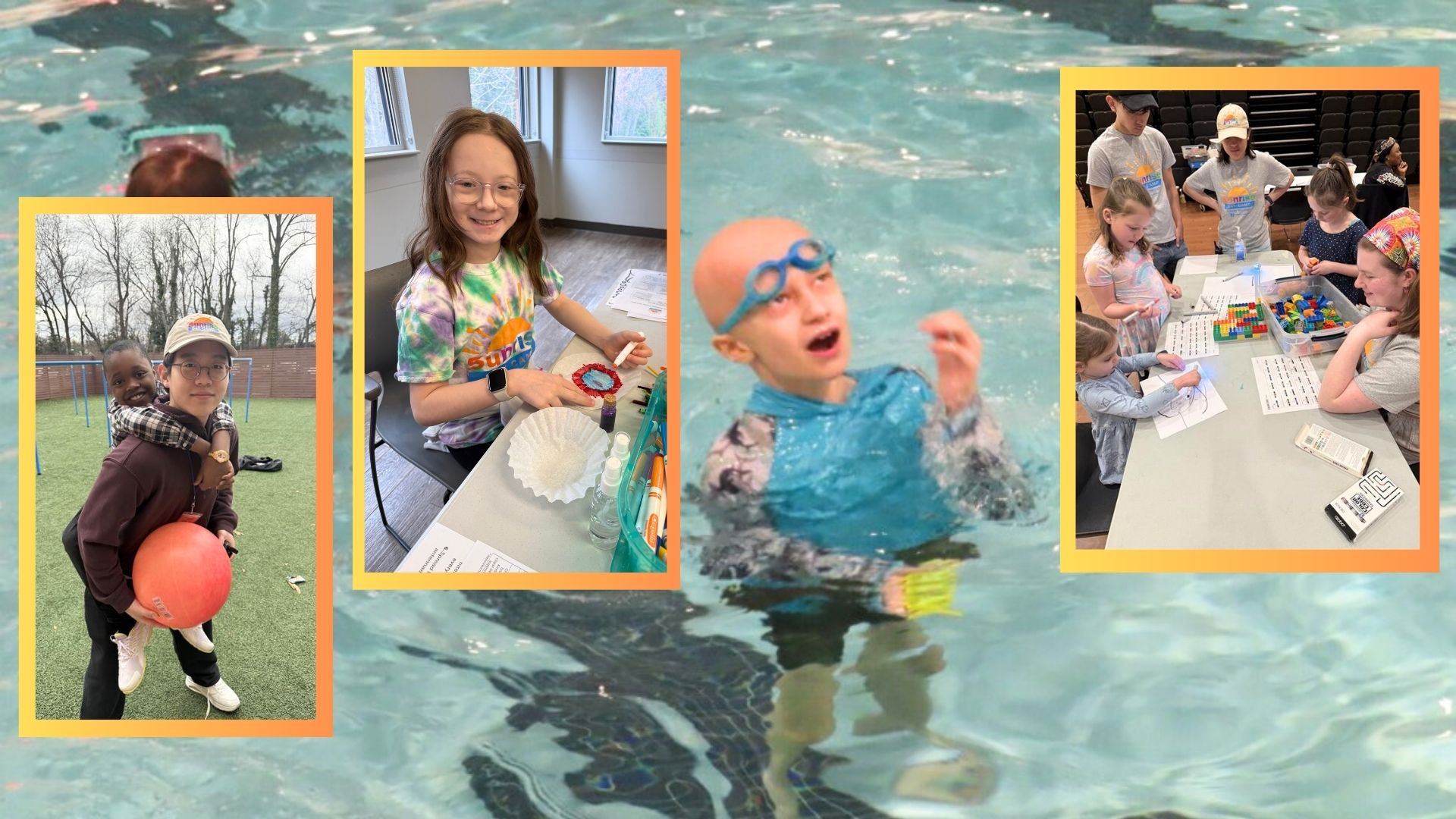
The day was all about letting campers do the things they love most. They got to swim, participate in STEAM activities and arts and crafts, take center stage at drama class, and reunite with their camp friends. Our campers are a mix of kids facing cancer, survivors, and their siblings, but at Sunrise Day Camp, they’re all just kids having fun. 

Camp YES Day was a slice of camp with one important twist. Parents were welcome to attend and join the activities with their families. This Family Fun Day was our most attended yet, with 65 participants representing 16 families and 17 dedicated staff members coming together for a day filled with laughter, connection, and unforgettable camp fun. 

When they weren’t busy enjoying special activities with their kids, parents shared the impact the various Sunrise programs have had on their families. These conversations reminded us that the impact of Sunrise extends beyond the campers themselves — it touches entire families. 

One family shared how the COVID pandemic felt doubly isolating when one of their sons was diagnosed with cancer and long hospital stays separated the two boys during treatments. During those difficult days, Sunrise on Wheels — Sunrise’s in-hospital program — gave the family something to look forward to, as the team brought toys, games, and fun directly to the hospital. That summer, Sunrise Day Camp brought the boys back together, while also bringing joy and normalcy back into their lives. 

When asked to describe Sunrise in just one word, parents responded with “blessing,” “connection,” “belonging,” “community,” “hope,” “home,” and “joy.” Each word reflected a different experience, but together they painted a powerful picture of what Sunrise means to the families we serve.  

What we heard from families on Camp YES Day is that Sunrise is more than a camp. It’s a source of hope during one of the most difficult periods of their lives. Sunrise Day Camp continues to be a place where entire families feel connected — to other families who understand the realities of having a child with cancer, to caring staff, and to a community that surrounds them with encouragement and support. 

Events like Camp YES Day also serve as an important reminder that programs like Sunrise exist because of the generosity of our community. All Sunrise programs, including our six-week summer day camp, Family Fun Days, and Sunrise on Wheels hospital programming, are offered completely free of charge. We can’t create that magic alone. 

As we look ahead to our fifth summer, Sunrise Day Camp – Greater Washington invites the larger community to come together to support our programs. Because when we say “yes” to children with cancer and their siblings, incredible things happen: joy returns, friendships grow, and families find a place where they truly belong.  

Say “yes” today and support Sunrise Day Camp. DONATE NOW 

In Honor of Women’s History Month: A Conversation with Board President-Elect, Dr. LaNitra M. Berger

Women’s History Month invites us to celebrate women’s achievements and reflect on how women lead, build community, and shape the future. Women like Dr. LaNitra M. Berger.

As associate professor of history and art history and director of African and African American Studies at George Mason University, and now board president-elect of the Pozez JCC, Dr. Berger is a leader with many passions. Her work centers on Black-Jewish relations and allyship, offering powerful lessons about leadership, resilience, and the importance of women’s voices across generations.

In honor of Women’s History Month, we interviewed Dr. Berger about her scholarly work, lifelong connection to the Jewish community, vision for the J at a pivotal moment in its history, and reflections on how the J champions women.

  1. Tell me a bit about your background and what brought you to the J.

I originally got involved with the J when my oldest son was at the Early Childhood Learning Center (ECLC), but my connection to the Jewish community began long before that. My husband is Jewish, and I’m Christian, but growing up, my mother felt that it was very important to support Jewish people throughout her life because of how they’d supported her growing up in Jim Crow America.

Once I got to college and met more Jewish people, I was able to really understand what that meant. I did find that in places where I was a minority, I tended to connect with other Jewish people and vice versa.

  1. I’d love to hear more about your scholarship.

My scholarship focuses on the Black–Jewish relationship in the arts. I lived in Cape Town in 2004, where I was embedded in the Jewish community while writing Irma Stern and the Racial Paradox of South African Modern Art. That experience allowed me to see both how challenging and how meaningful allyship between Black and Jewish communities can be on a global scale.

I’m currently working on two book projects. One is co-written with Holocaust historian Dr. Laura Auketayeva and examines Jewish refugee scholars who taught at HBCUs (Historically Black Colleges and Universities) during the Civil Rights era. It’s astonishing to see how important Jews were in the most consequential moments of the Civil Rights movement, going undercover to find information to stop segregation. That’s a story that needs to be told.

I’m also writing a solo book about how Black artists have explored Jewish themes while grappling with questions of racial identity in America. I’m really interested in this question because of my commitment to Black and Jewish relations, but I also believe that there are so many lessons that we as a society can take in understanding how to sit with other people’s pain and to sit with their joy, too.

  1. What does it mean to you, as a woman and an intercultural leader, to serve as Board President-Elect of the J?

I’m deeply honored that my colleagues and peers trust my leadership, and I approach this role with humility and excitement. This is a critical moment for the Jewish community, given the trauma following October 7 and the rise in antisemitism.

I have long considered myself a staunch ally of the Jewish community, and I feel this moment deeply because of the parallels with the trauma Black Americans have experienced. Addressing antisemitism and increasing understanding of the Jewish experience are essential for the health of the entire community.

  1. How does the J work to champion women?

The J’s focus on supporting women is one of the reasons I became so involved here. When my son was at the ECLC, I participated in The Mothers’ Circle, a program for non-Jewish women raising Jewish children, which introduced me to Jewish values in family life and connected me with other mothers I’m still close with today.

I also lectured through the Adult Learning Institute, where scholars were encouraged to highlight Jewish women’s stories. That support helped me complete my book on a Jewish South African female artist.

Just as importantly, the J’s leadership reflects the belief that women are equal contributors. Seeing Susan Kristol serve as Board President showed me what thoughtful, capable leadership looks like and made me feel confident about joining the board. The J is intentional about ensuring women feel welcomed, represented, and central to a thriving Jewish community.

  1. What is your vision for the J as Board President?

The J’s focus on young children and families is foundational, and I want to continue strengthening those connections, especially as the J approaches its 50th anniversary.

In addition, my scholarship has shown that the historic Black-Jewish relationship has produced social change, cultural innovation, artistic genius – all of the things that we enjoy in American life. Northern Virginia has a rich history of the Black community and the Jewish community, and I would really like to see that relationship thrive while I’m President.

I’m also committed to ensuring the J is positioned for long-term sustainability – financially, operationally, and structurally. As Northern Virginia continues to grow, I want the J to meet people where they are and help foster meaningful micro-communities that extend beyond the building itself.

  1. How does the J honor women’s history all year long?

Women are underrepresented across many fields, and that inequity can’t be addressed by focusing on one month alone. Supporting an intergenerational community helps change that narrative. Older women, in particular, bring immense wisdom and perspective, and a community like the J that values people at every stage of life helps ensure that women’s contributions are recognized and respected year-round.


As we honor Women’s History Month and look toward the future, the J continues to thrive because of leaders like Dr. Berger and because of the generosity of our donors. Your support ensures that the J remains a place where women lead, families connect, and communities grow stronger together. You can help sustain the J for generations to come with a gift of your own.

5 Ways Pozez JCC Supports Jewish Disability Awareness and Inclusion

February is Jewish Disability Awareness and Inclusion Month (JDAIM), a time to celebrate differences, amplify voices, and reaffirm our commitment to building a community where everyone belongs. At the J, inclusion is woven into every season of the year, from winter fundraisers to summer camp to year-round social and educational programs.

“Everyone brings their own unique self to come together and make all that we do so special, and to foster a sense of pride in who they are,” says Alison Pasternak, the Inclusion and Disability Program Coordinator at Pozez JCC. “Our inclusion programs are a place where people come to find acceptance, community, friendship, and fun.”

In honor of JDAIM, we’re spotlighting five standout programs the J runs to support people with disabilities in February and beyond. 

1. ReelAbilities Film Festival: Building Bridges Through Storytelling

Each winter, the ReelAbilities Film Festival: Greater Washington, powered by Pozez JCC, uses film and art to raise awareness and celebrate people with disabilities. This year, the film festival is running from Jan. 25 through March 8, with screenings and events across Virginia, Maryland, and Washington, D.C.

ReelAbilities showcases the full range of talent and lived experience within the disability community, pairing award-winning films with interactive programming. Each year during the festival, the J displays the work of an artist with disabilities in the Bodzin Art Gallery.

“The festival connects people who might not otherwise interact with different parts of the disability community,” Alison says. “It really builds a bridge and allows those interactions to occur.”

Through powerful storytelling, ReelAbilities invites audiences to see disability not as a limitation, but as part of the diverse fabric of our community.

2. Going Places!: Building Friendships Through Shared Experiences

Going Places! is a monthly social club that brings neurodiverse teens and adults together to create memories with people with similar lived experiences. 

Going Places! is a safe haven for me from the dismissive outside world,” says Julia Cooper, who has been a participant for over 10 years. “I’ve gained lots of lasting friendships in this group, and I get excited to hang out with people who understand life with different abilities.”

Through chocolate tastings, theater shows, and other outings, the program is creating lifelong friendships, Alison added. It provides the space for these teens and adults to explore new places and have novel experiences in a supported, welcoming environment.

“Participants come back again and again,” she says. “They’ve made real friendships and keep in touch outside of Going Places! It’s difficult making long-term friendships as an adult, especially as an adult with disabilities. We give them a space to find their people.”

3. Camp Kesher: Summer, Friendship, and Independence

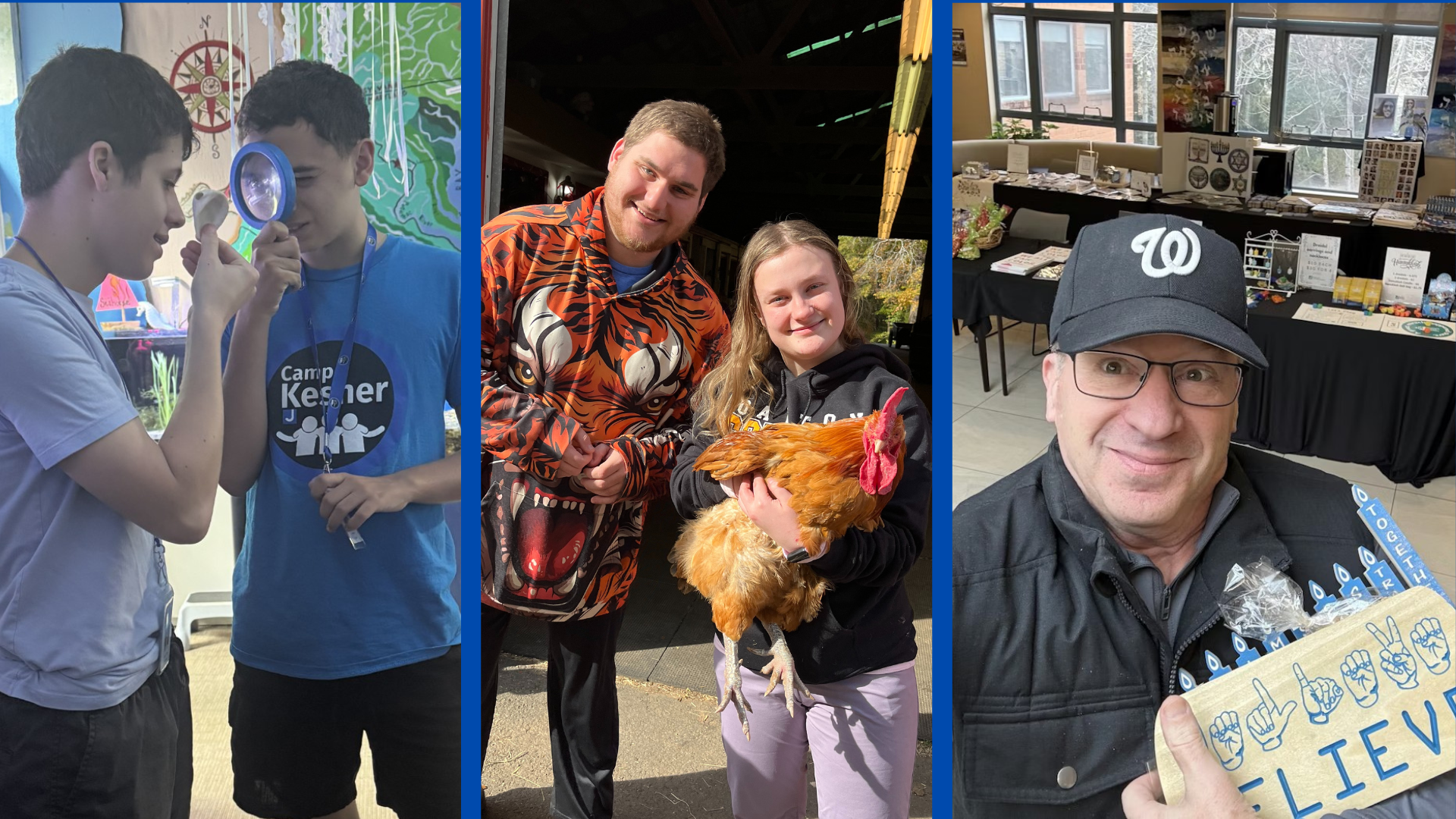
Camp Kesher is a summer day camp for neurodiverse high schoolers, recent graduates, and young adults ages 19-27. Over four weeks — two for teens and two for young adults — campers explore Greater DC through daily field trips, lunches out, and activities that build confidence and independence.

Susan Clay, whose daughter Sara attends the young adult session, calls it a life-changing experience.

“We plan our whole year around it,” she says. “At this age, young adults with disabilities still want to be active and make friends. Without Kesher, those opportunities just don’t exist.”

Alison describes Camp Kesher as a safe, joyful space.

“Campers get to just have fun,” she says. “They learn real-life skills like ordering food at restaurants, but they’re also laughing, exploring, and being themselves. They deserve that.”

4. Social Skills Classes: Laying the Foundation Early

Social Skills Classes at the J support preschool and school-aged children with Level 1 Autism, ADHD, developmental delays, and related social communication challenges. These classes focus on practicing interaction, communication, and friendship-building in a supportive environment.

Mark Shaffer, now 16, started social skills classes at age 9.

“I needed help socializing, making new friends, and maintaining relationships,” Mark says. “In the classes, I learned about my emotions and what calms me down when I’m upset. I always look forward to playing games and going on fun field trips.”

Alison adds that it’s especially rewarding to see participants grow over time, with many transitioning from social skills classes into programs like Going Places! or Camp Kesher.

5. Holiday Bazaar: Celebrating Talent and Creativity

Each winter, the Pozez JCC Holiday Bazaar showcases the artistic talents of individuals with disabilities and/or mental illnesses while raising funds for Inclusion and Disability Services. Local vendors sell handmade baked goods, jewelry, photography, artwork, and more, making it easy to shop with purpose.

“It felt exciting to be part of a community event and see how people responded to my work,” says Hina Sehgal, who sold her handmade jewelry for the first time at last year’s Bazaar. “People kept stopping by my table to compliment my work and ask questions. That made me feel really proud and confident as a creator.”

Another participant, Miles Sanford, has been selling stickers, art prints, cards, and small clay trinkets at the Bazaar since 2018.

“Art is my special interest and a way to communicate with the world when I have trouble communicating,” Miles says. “I’ve met amazing artists that share the same interests as me, and it feels easy talking to people at the Bazaar.”

In addition to raising funds, the Bazaar invites the broader community to view disabilities not as limitations, but as sources of unique perspectives and creative expressions.

How You Can Support Disability Programming at the J

This JDAIM, and all year long, the J remains committed to inclusion, belonging, and meaningful connection. No matter the season, there’s a place for everyone here.

You can support this work by showing up to inclusive community events like the Holiday Bazaar and ReelAbilities, making a gift to initiatives like Going Places! and Camp Kesher, and spreading the word that the J is a welcoming resource for children and young adults looking to connect, socialize, and be valued for who they are.

L’Dor V’Dor: How the J Shapes Lives Across Generations

The Pozez JCC of Northern Virginia is the kind of place where time folds in on itself. Where past, present, and future share rooms and hallways. Where belonging can and does stretch across decades and generations. Where preschoolers play with blocks and seniors play card games, all in a shared space.

For some families, the J is part of their story.

It certainly is for the Chabrows.

When Andrea Chabrow walked into the J’s old building as a young adult who was new to the area, she wasn’t looking for a legacy. She’d moved to Virginia for a teaching job and was already thinking about returning to New Jersey. A friend suggested she check out the J’s young adult programs to feel a little more at home.

What she didn’t expect was Michael. She met him in the J’s summer volleyball league, and at first, she wasn’t that impressed.

“He wasn’t really my type, but I had a friend who was interested in him, so of course that made me interested, too,” she remembers.

But then came the dinner with friends, the unexpected warmth, and the moment he showed up at her door helping her move on a rainy day, carrying flowers so drenched that all their petals had fallen off. Something shifted. And from that shift grew a marriage, a family, and a story that would eventually return to the J again and again.

Decades later, their son Bryan found his way back to Northern Virginia after years in Los Angeles. With his wife Sarah and their children Levi, 4, and Olive, 6 months, he returned seeking something familiar — family support, more space, and a sense of community.

They toured a number of preschools, but the J stood out. Levi was already used to a JCC preschool in Los Angeles, and when they walked into the Early Childhood Learning Center (ECLC) in Fairfax, something clicked.

“We really wanted a place with community,” Bryan says. “Somewhere people actually get to know each other.”

Now Levi is thriving there, and Bryan finds himself in the fitness center regularly, learning to work out in a space that feels welcoming rather than intimidating. The J, once the setting of his parents’ love story, has become the place where he builds new memories with his own children.

“It’s nice that it’s a place that has special memories for my parents and that will also have special memories for Levi,” he notes.

The Adler family’s story stretches even further back, woven tightly into the very origins of the J itself.

Laura Adler, today the Pozez JCC’s Senior Director of Marketing and Communications, grew up watching the J evolve because her parents, Dotty and Al Fuchsman, were among those who helped create it. In the early years, her father served on the board, her mother worked on the staff fundraising to make the building possible, and they both worked on various committees for decades.

“I remember licking envelopes at the J’s office on Dorr Avenue and helping with mailings as a kid,” she recalls. “It’s always felt natural to me to be involved with the J and to help build the Jewish community in Northern Virginia.”

Her brother, Michael, was among the first to go to Camp Achva in 1969, back when the camp had only a handful of kids. Laura and her older brother eventually became campers too, and then all three were counselors. It felt like a natural progression when she joined the J’s board as an adult, then joined the staff in 2007.

When Laura and her husband, David, had children, it was important to them that they grew up at the J to feel the same comfort in the Jewish community that they did. The kids attended preschool, participated in after-school programs, spent summers at Camp Achva, and later returned as staff. Until last year, Ilana (now 33) served as the Assistant Director and Family Support Specialist of Pozez JCC’s Sunrise Day Camp.

For Laura, walking into the building feels like stepping into a living scrapbook. She sees the faces of people who are friends of her parents, watched her grow up, and celebrated milestones with her children.

“I feel so at home here, and so does my family. This sense of belonging to this community, the J family, it’s been a constant in our lives.”

What makes the Chabrows’ and the Adlers’ stories remarkable is how seamlessly the J holds these generations together. It’s a place where a preschool class might walk through the lobby on their way to the gym, waving to seniors playing Mah Jongg. Where a young parent can meet new friends who become lifelong companions. Where families who arrived decades apart find themselves connected through shared experiences and shared values.

As Laura puts it, “The J is truly a home for all generations. Through the dedication of our staff and the reach of our programs, we hope that everyone who engages with the J, no matter their age or background, feels welcomed and part of a large, vibrant Jewish family.”

Behind every one of these stories — every wedding that began with a volleyball game, every preschooler’s first challah, every memory made at Camp Achva, every senior who finds connection over coffee — are donors who made it all possible. Their generosity is the quiet engine that keeps the J thriving. They ensure the ECLC can nurture children like Levi, the fitness center can welcome adults like Bryan, and the J can create camps, classes, and celebrations that support families just beginning their Jewish journeys as well as those whose roots stretch back decades.

A gift to the J sustains a community where stories like the Chabrows’ and the Adlers’ can unfold, a community where people of all ages feel welcome, and where legacy shapes the future.

Behind the Scenes at the J: What It Really Takes to Sustain Our Community

Jews don’t practice charity. We pursue tzedakah (justice) and gemilut chasadim (acts of lovingkindness) in pursuit of tikkun olam (repairing the world). Charitable giving is just one way in which we make the world a better place. We take what we earn from our own hard work and put it toward benefitting others in our community. It’s a win-win; we fulfill commandment and our community is strengthened as a result. 

Maimonides, however, challenges us to think about how we give. He ranks charitable giving from the lowest degree – giving only when asked – to the highest: forming a business partnership with someone in need, so that person no longer needs to rely on others to survive.  

Maimonides’ second highest level of giving is anonymous giving and receiving, in which the donor doesn’t know specifically where his gift will go, and the recipient does not know who helped him. In a way, that’s the type of giving we need at the J.  

Most people like to see visible results from their giving – programs continued, research pursued or an animal saved.  But we need tzedakah that supports our behind-the-scenes operations that are so vital to the gathering spaces and activities you love, but that are invisible to most members.  

These include: 

  • Security personnel, surveillance systems, and access controls to keep our community safe.  
  • Modern, reliable technology, including our computers, software, and IT systems—everything from online registration to donation management.  
  • A full-time cleaning service, as well as continual maintenance and repairs, so we can sustain a clean, comfortable, and functional space.  
  • Insurance to cover everything from fire protection and cybersecurity to our vehicles for after-school transportation, our childcare programs, our fitness center and more.  

 These expenses alone add up to more than one million dollars annually, but membership dues and program fees cover less than 75% of the cost of operating the J. Charitable support makes everything we do possible.  

Our staff strives to make engaging with the J feel easy, but behind that ease is a tremendous amount of effort, expertise, and heart — and the invisible systems that support all we do.  

As we approach the end of the year, we invite you to consider what the J means to you, your family, and our broader community. If the J has made a difference in your life—or if you simply value the role it plays in our region—please consider making a tax-deductible gift this year.  

You might not see all the things that go into making the J a central part of your community, and you might never know where your gift has made a difference. But trust us – your contribution will have a big impact in keeping the J running smoothly. And that’s a visible result our entire community will notice and appreciate. 

Finding Light All Year Long: How the Pozez JCC Helps Jewish Families Feel Seen, Connected, and Proud

December can be complicated for many American Jewish families. While lights twinkle at neighbors’ houses and storefronts fill with Christmas trees, Hanukkah, and Jewish identity more broadly, can feel overshadowed. Parents at the J often share that even well-meaning questions like “What’s on your Christmas list?” can leave their children unsure of how to respond. 

That’s why, every December, the J steps forward with joyful, welcoming programming that celebrates Jewish identity in ways that feel both proud and affirming.

“Although Hanukkah is a relatively minor holiday, it becomes a major marker of Jewish visibility at this time of year,” says Amy Lummer, Family Engagement & Community Partnerships Director. “We strive to create space where every family feels seen and where Jewish celebrations shine in their own right.”

This year, the J is hosting two large community Hanukkah celebrations, each expected to draw hundreds. Smaller gatherings hosted by Growing Jewish Families (GJF) will offer storytimes, relaxed playdates, and meetups at parks and donut shops.

“All through December, our programs are Hanukkah fun for every age,” Amy says. “Our goal is for every child and parent to feel proud of their heritage and confident that their celebrations are valued within the broader community.”

That sense of belonging doesn’t fade when the menorahs are put away. At the J, December is just the gateway to a year filled with connection. And for many families, that connection begins the moment they arrive in Northern Virginia.

For newcomers, GJF offers a warm landing place. Its J-Family Ambassadors meet families one-on-one, help them navigate local resources, and create easy, low-pressure ways to connect Jewishly through playgroups, holiday events, coffee meetups, and neighborhood gatherings.

For Elisabeth Kopecky, who moved to NoVa last year with a toddler, an infant, and a husband on active military duty, GJF quickly became an essential support network.

“This program just makes it so easy,” she says. “You’d have to try not to be involved. There are so many activities and so many people to meet.”

What started as a search for community became something deeper.

“Tracy, one of the GJF ambassadors, has become one of my closest friends,” she says. “She watched my older son while I was giving birth to my younger one. GJF is very much the center of our support system here.”

The connections have been meaningful not only for Elisabeth but for her children as well, becoming an anchor during a period of transition.

That continuity is part of what makes the J feel like a year-round home. School-Age Services Director Greg Feitel says the J’s programs are intentionally designed to grow with families. Many children begin at the Early Childhood Learning Center (ECLC), then move into Chai 5 after-school care, participate in Vacation Days programming during school breaks, and sign up for Camp Achva in the summer. 

Jewish values are the foundation of all of these programs.

“The philosophical underpinnings of all our programs are 100 percent Jewish,” Greg explains. “It’s not a strict religious practice, but a value system: creating positive associations with Judaism and a welcoming environment for anyone who comes. Our planning process dives into whether each activity creates a more joyful experience or another place for connections.”

Families feel the impact of that intention. Rachel Davis, whose son Sammy is now in first grade, says the J has helped her family build lasting friendships since moving back to NoVa three and a half years ago. Sammy started in ECLC, then continued into GJF programming, Vacation Days, and Camp Achva.

“Last summer was his first at Camp Achva, and we’ll have him back this coming year,” Rachel says. “He had such a blast reconnecting with preschool friends and making new ones.”

The J’s holiday and school-break programs also help Sammy stay connected Jewishly.

“As kids get older, they notice all the Christmas stuff,” Rachel says. “For Jewish kids, being able to celebrate Hanukkah with the community helps them feel involved. It gives them a sense of pride in their Jewish identity.”

She’s also found her own community at the J, connecting with other parents, joining a monthly Mah Jongg group, and watching her husband find his own place through the J’s fitness classes.

“When you’re moving to a new area, finding community is so important,” she says. “The J has been that place for us.”

Much of what families experience at the J is strengthened by community support behind the scenes. A generous donation, matched by community contributions, recently made it possible to renovate the ECLC playground, giving young learners a safer and more engaging outdoor space. GJF and Camp Achva continue to expand thanks to grant funding that supports infrastructure and program enhancement. And across all departments, volunteers play a key role by giving their time to help programs run smoothly and remain accessible.

As camp registration opens in mid-December, the J’s full-circle approach becomes clear. Families may walk through the door because they’re looking for a Hanukkah celebration, but they stay because they’ve found a community where they belong, one that carries them through every season, every transition, and every stage of childhood. The J provides that support in large part because of donors who believe in building a community where Jewish families feel seen, supported, and proud all year long.

Because being Jewish can feel different, especially in December. But at the J, families never have to feel alone.

Interested in helping families feel connected all year long? Consider registering for an upcoming program, volunteering your time, or making a donation that helps our community shine brightly.

Magic You Can Measure: The Transformative Impact of Sunrise Day Camp 

When most people think about families facing pediatric cancer, words like joy, magic, or hope rarely come to mind. Yet, these are exactly the experiences children and their families discover at Sunrise Day Camp, a free camp for kids with cancer and their siblings held at Pozez JCC.  

At the end of camp this year, we asked families to reflect on their children’s experiences — and what they shared was powerful.  “Sunrise has created magical moments and experiences from raw and heartbreaking situations,” shared camp mom Lindsay D.  

Her sentiment is not only felt by families but backed by research. Between June and August of 2024, the Sunrise Association partnered with researchers from Tel Aviv University School of Public Health to conduct a comprehensive study on the impact of Sunrise Day Camps. The study rigorously measured several core areas of children’s well-being — resilience, quality of life, stress and anxiety, sibling relationships, illness management, well-being, and self-esteem — to see if camp had a positive effect. 

Not only did camp improve resilience and well-being, according to surveys taken before and after the summer, but a third survey conducted 12 weeks after camp showed sustained improvements in key areas (Sunrise Association, 2024). That means that camp continues to enrich the lives of kids with cancer and their siblings long after they say goodbye to their beloved counselors and camp friends. 

While this study did not include our local Sunrise program, our families agree that Sunrise Day Camp improves their lives – especially in three significant areas. Unsurprisingly, their words align with the study’s findings. 

Camp reduces family stress and anxiety 

For families navigating cancer, daily stress can feel overwhelming. Sunrise gives children space to play, explore, and experience normal childhood joys  — and offers parents a rare moment of relief. 

As Ariane G. shared, having her children at Sunrise Day Camp “meant a lot to me, especially during chemo weeks when I could just focus on Daniel and not worry about what my other children were doing at home. Also, during tough weeks with multiple ER visits, it’s nice that my other children are busy at camp instead of worrying about their brother.”  

Not only do parents feel the Sunrise effect, but children carrying the heaviest emotional burdens also feel their stress ease and their spirits lift in the camp environment. 

Summer fun together improves sibling relationships  

Sunrise Day Camp prioritizes creating a space where siblings can be silly, play, and enjoy each other — even when treatment realities feel heavy. Parents say that camp allows their children to bond with each other and feel like kids again. The study highlights that camp meaningfully supports sibling relationships, easing tensions and strengthening family unity. 

This return to normalcy helps siblings reconnect and build stronger bonds, even during the most challenging seasons. 

Sunrise Day Camp builds resilience in campers and their families 

Some families at Sunrise face unimaginable loss, while others are in the midst of grueling treatment. In every situation, Sunrise helps children and siblings build resilience as they navigate hardship. 

The Sunrise Association’s impact study reported that “resilience increased significantly across the board, with children leaving camp more emotionally equipped to handle adversity.” This held true for both diagnosed campers and siblings.  

Sunrise makes long-term connections with its families, who are welcomed back at Sunrise Day Camp year after year — including siblings who continue attending after the loss of a brother or sister. 

“Last year, our eldest son attended while battling brain cancer. Sunrise gave him a place to just be a kid, surrounded by understanding, compassion, and fun,” a camp mom shared. “After his passing last September, it meant the world to us to see his siblings welcomed back with the same warmth and joy he experienced. We cannot thank the camp staff enough for the kindness, energy, and heart they pour into this program. It has brought happiness to our children during both the hardest and most hopeful seasons of our lives, and we will always be grateful.” 

Your support of Sunrise supports the well-being of entire families 

The numbers don’t lie: The magical experiences families describe at Sunrise Day Camp are not only deeply felt but also have a measurable, transformative impact on the well-being of children with cancer and their families. 

Sunrise Day Camp relies on the generosity of our community to offer this amazing service and support to families impacted by pediatric cancer. We do not charge families a single dollar to attend camp. Every moment of joy, every friendship formed, every boost in confidence is made possible because of community members who care.  

Your support will help Sunrise ensure that the magic of camp continues to brighten the lives of children with cancer and their siblings year after year. It costs $6,000 to give one child a full summer of camp and year-round programs — your gift can make that possible. 

Donate now: https://give.thej.org/campaign/637140/donate