




In Honor of Women’s History Month: A Conversation with Board President-Elect, Dr. LaNitra M. Berger
Women’s History Month invites us to celebrate women’s achievements and reflect on how women lead, build community, and shape the future. Women like Dr. LaNitra M. Berger.
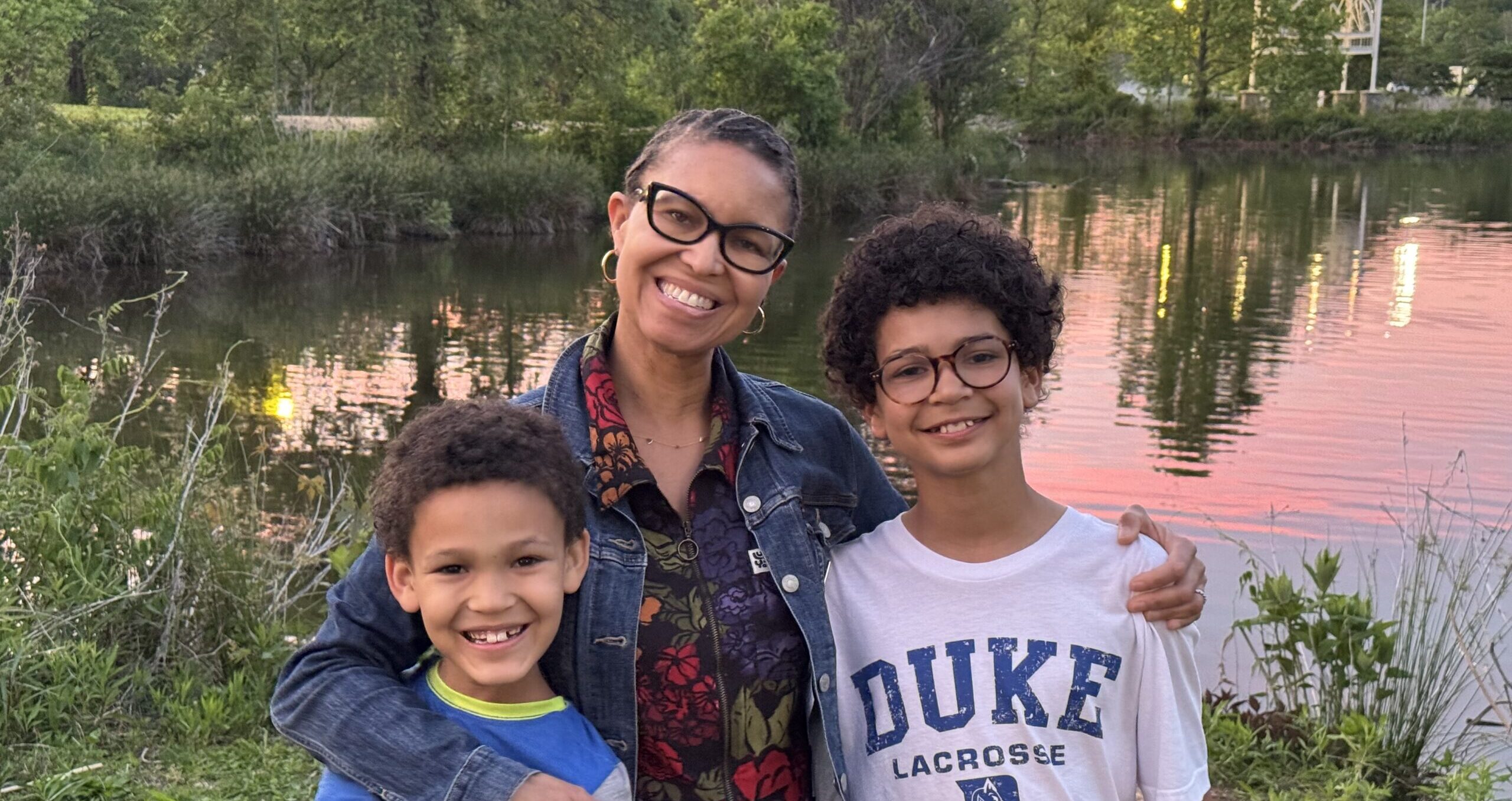
As associate professor of history and art history and director of African and African American Studies at George Mason University, and now board president-elect of the Pozez JCC, Dr. Berger is a leader with many passions. Her work centers on Black-Jewish relations and allyship, offering powerful lessons about leadership, resilience, and the importance of women’s voices across generations.
In honor of Women’s History Month, we interviewed Dr. Berger about her scholarly work, lifelong connection to the Jewish community, vision for the J at a pivotal moment in its history, and reflections on how the J champions women.
- Tell me a bit about your background and what brought you to the J.
I originally got involved with the J when my oldest son was at the Early Childhood Learning Center (ECLC), but my connection to the Jewish community began long before that. My husband is Jewish, and I’m Christian, but growing up, my mother felt that it was very important to support Jewish people throughout her life because of how they’d supported her growing up in Jim Crow America.
Once I got to college and met more Jewish people, I was able to really understand what that meant. I did find that in places where I was a minority, I tended to connect with other Jewish people and vice versa.
- I’d love to hear more about your scholarship.
My scholarship focuses on the Black–Jewish relationship in the arts. I lived in Cape Town in 2004, where I was embedded in the Jewish community while writing Irma Stern and the Racial Paradox of South African Modern Art. That experience allowed me to see both how challenging and how meaningful allyship between Black and Jewish communities can be on a global scale.
I’m currently working on two book projects. One is co-written with Holocaust historian Dr. Laura Auketayeva and examines Jewish refugee scholars who taught at HBCUs (Historically Black Colleges and Universities) during the Civil Rights era. It’s astonishing to see how important Jews were in the most consequential moments of the Civil Rights movement, going undercover to find information to stop segregation. That’s a story that needs to be told.
I’m also writing a solo book about how Black artists have explored Jewish themes while grappling with questions of racial identity in America. I’m really interested in this question because of my commitment to Black and Jewish relations, but I also believe that there are so many lessons that we as a society can take in understanding how to sit with other people’s pain and to sit with their joy, too.
- What does it mean to you, as a woman and an intercultural leader, to serve as Board President-Elect of the J?
I’m deeply honored that my colleagues and peers trust my leadership, and I approach this role with humility and excitement. This is a critical moment for the Jewish community, given the trauma following October 7 and the rise in antisemitism.
I have long considered myself a staunch ally of the Jewish community, and I feel this moment deeply because of the parallels with the trauma Black Americans have experienced. Addressing antisemitism and increasing understanding of the Jewish experience are essential for the health of the entire community.
- How does the J work to champion women?
The J’s focus on supporting women is one of the reasons I became so involved here. When my son was at the ECLC, I participated in The Mothers’ Circle, a program for non-Jewish women raising Jewish children, which introduced me to Jewish values in family life and connected me with other mothers I’m still close with today.
I also lectured through the Adult Learning Institute, where scholars were encouraged to highlight Jewish women’s stories. That support helped me complete my book on a Jewish South African female artist.
Just as importantly, the J’s leadership reflects the belief that women are equal contributors. Seeing Susan Kristol serve as Board President showed me what thoughtful, capable leadership looks like and made me feel confident about joining the board. The J is intentional about ensuring women feel welcomed, represented, and central to a thriving Jewish community.
- What is your vision for the J as Board President?
The J’s focus on young children and families is foundational, and I want to continue strengthening those connections, especially as the J approaches its 50th anniversary.
In addition, my scholarship has shown that the historic Black-Jewish relationship has produced social change, cultural innovation, artistic genius – all of the things that we enjoy in American life. Northern Virginia has a rich history of the Black community and the Jewish community, and I would really like to see that relationship thrive while I’m President.
I’m also committed to ensuring the J is positioned for long-term sustainability – financially, operationally, and structurally. As Northern Virginia continues to grow, I want the J to meet people where they are and help foster meaningful micro-communities that extend beyond the building itself.
- How does the J honor women’s history all year long?
Women are underrepresented across many fields, and that inequity can’t be addressed by focusing on one month alone. Supporting an intergenerational community helps change that narrative. Older women, in particular, bring immense wisdom and perspective, and a community like the J that values people at every stage of life helps ensure that women’s contributions are recognized and respected year-round.
As we honor Women’s History Month and look toward the future, the J continues to thrive because of leaders like Dr. Berger and because of the generosity of our donors. Your support ensures that the J remains a place where women lead, families connect, and communities grow stronger together. You can help sustain the J for generations to come with a gift of your own.


